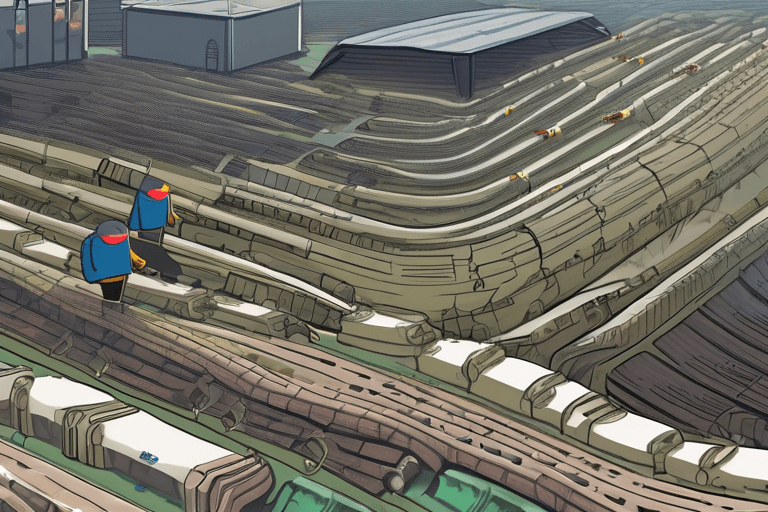
Rescue workers in Cebu City, Philippines, were racing against time Saturday to find dozens of people still missing after a landslide at the Binaliw landfill on Thursday. Mayor Nestor Archival said signs of life had been detected at the site, two days after the collapse.
Four people have been confirmed dead, and 12 others were hospitalized, Archival stated. The privately-owned landfill collapsed while 110 workers were on site, according to officials.
"Authorities confirmed the presence of detected signs of life in specific areas, requiring continued careful excavation and the deployment of a more advanced 50-ton crane," Archival said in a Facebook post Saturday morning local time.
Conditions for emergency services at the site were challenging due to unstable debris, and crews were awaiting the arrival of better equipment, the mayor added. The ongoing search and rescue operation highlights the risks associated with waste management in densely populated areas. Landfill collapses can occur due to a variety of factors, including excessive rainfall, poor construction, and inadequate monitoring of waste levels.
The incident underscores the need for improved safety regulations and infrastructure at landfill sites, particularly in developing countries where waste management practices may not meet international standards. The use of AI-powered monitoring systems could potentially mitigate such disasters in the future. These systems can analyze real-time data from sensors embedded within the landfill to detect signs of instability, such as ground movement or changes in gas levels. Machine learning algorithms can then be used to predict potential collapse zones and alert authorities, allowing for timely evacuation and preventative measures.
The deployment of advanced technologies like drones equipped with thermal imaging cameras can also aid in search and rescue operations, helping to locate survivors trapped under debris. Furthermore, AI can optimize waste management processes by analyzing waste composition and volume, enabling more efficient recycling and reducing the amount of waste sent to landfills.
The incident in Cebu City serves as a stark reminder of the human cost of inadequate waste management and the potential benefits of integrating AI technologies to improve safety and sustainability in the sector. The focus remains on the ongoing rescue efforts and providing support to the affected families, while investigations into the cause of the collapse are expected to follow.

















Discussion
Join the conversation
Be the first to comment