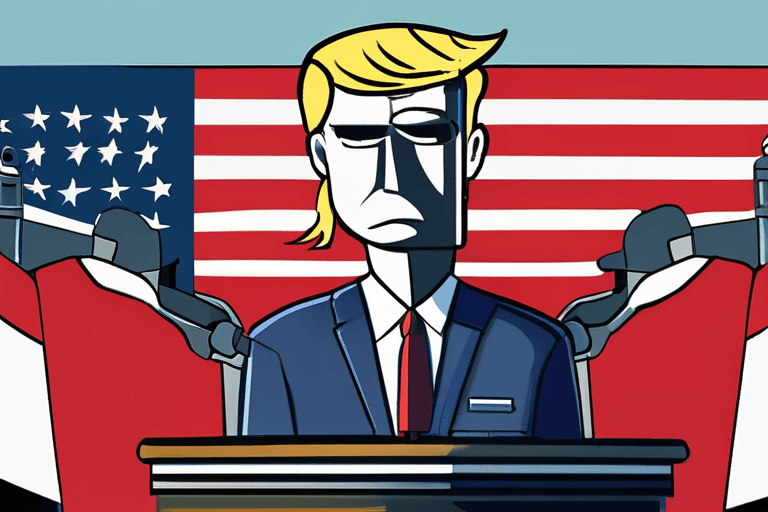
In early 2026, President Donald Trump's administration initiated an operation in Venezuela that resulted in the seizure of President Nicolás Maduro. Aboard Air Force One, en route from Florida to Washington D.C., Trump informed reporters that the U.S. government was now in control of Venezuela and that American companies were prepared to exploit the country's oil reserves.
The operation, executed without U.S. casualties but resulting in fatalities among Venezuelan and Cuban individuals, prompted Trump to issue warnings to other nations, suggesting they could face similar intervention.
The events in Venezuela have sparked debate regarding the nature of U.S. foreign policy under the Trump administration, with some observers characterizing it as a form of neo-imperialism, while others argue it represents a more transparent articulation of traditional U.S. interests.
Critics of the administration's actions argue that the intervention in Venezuela constitutes an act of aggression aimed at securing economic and political dominance in the region. They point to the potential exploitation of Venezuelan oil resources by U.S. companies as evidence of an imperialistic agenda.
Conversely, proponents of the administration's policies contend that the intervention was necessary to address what they perceive as a failing state and to protect U.S. interests in the region. They argue that the U.S. has a long history of involvement in Latin American affairs and that the current actions are consistent with that historical precedent.
Policy analysts note that the situation raises questions about international law and the principle of national sovereignty. The U.S. government's justification for the intervention has been met with skepticism from some international legal scholars, who argue that it violates established norms of international relations.
The long-term implications of the U.S. intervention in Venezuela remain uncertain. The political and economic stability of the region is at stake, and the actions of the Trump administration could have far-reaching consequences for U.S. relations with other countries in Latin America and beyond. The situation continues to evolve, and further developments are expected in the coming weeks and months.

















Discussion
Join the conversation
Be the first to comment