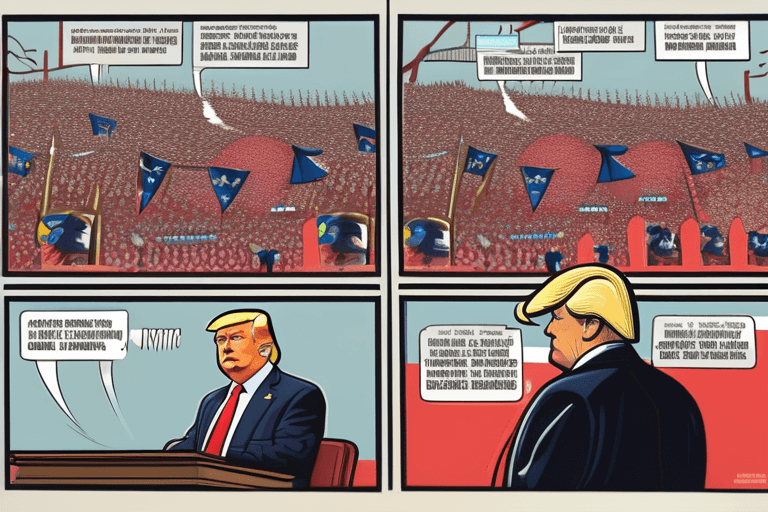
In early 2026, President Donald Trump's administration initiated an action against Venezuela, culminating in the seizure of President Nicolás Maduro. Aboard Air Force One, en route from Florida to Washington D.C., Trump reportedly told reporters that the U.S. government was now in control of Venezuela and that American companies were prepared to exploit the nation's oil reserves. He also suggested that other countries could face similar intervention.
The operation, according to Trump, was executed without any U.S. casualties, though he acknowledged casualties among Venezuelan and Cuban individuals. The stated justification for the action has been framed by some as a move to stabilize the region and protect U.S. interests. Critics, however, have characterized it as an act of aggression and a potential violation of international law.
The events in Venezuela have sparked debate regarding the nature of U.S. foreign policy under the Trump administration. Some analysts argue that these actions represent a new form of imperialism, characterized by the overt pursuit of territorial and economic control. Others contend that it is simply a continuation of traditional U.S. foreign policy, albeit one stripped of diplomatic niceties and expressed with greater candor.
"This is not a departure from established patterns, but rather an amplification of them," said Dr. Eleanor Vance, a professor of political science at Georgetown University, who specializes in U.S. foreign relations. "The U.S. has a long history of intervention in Latin America, driven by economic and strategic considerations."
Conversely, Professor Robert Harding, a fellow at the American Enterprise Institute, argued that the Trump administration's approach represents a significant shift. "The willingness to openly assert control and exploit resources marks a new level of assertiveness," he stated. "It signals a willingness to disregard international norms and pursue U.S. interests without restraint."
Policy details surrounding the U.S. involvement in Venezuela remain unclear. The Trump administration has not yet released a comprehensive plan for the country's future governance or economic development. However, reports suggest that discussions are underway with various international actors regarding potential partnerships and investments.
The situation in Venezuela remains fluid, with ongoing protests and political instability. The international community is divided in its response, with some nations condemning the U.S. intervention and others expressing cautious support. The long-term consequences of these events for the region and for the global balance of power are yet to be determined.
















Discussion
Join the conversation
Be the first to comment