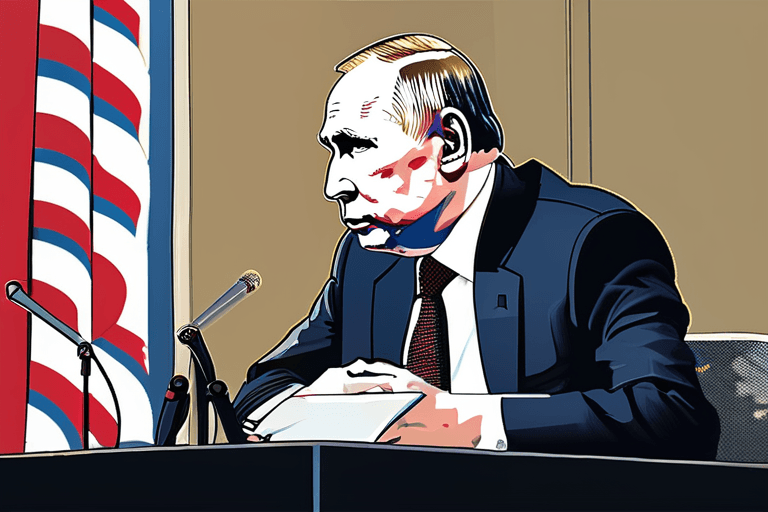
Nicolás Maduro, the leader of Venezuela, is currently detained in a federal detention center in Brooklyn after being apprehended in Caracas during a U.S. military raid ordered by President Trump last Saturday. Russian President Vladimir Putin has remained silent on the matter for a week, a silence that analysts attribute to a strategic shift in Moscow's foreign policy.
This silence, while partly influenced by Russia's New Year holiday period, reflects a broader trend of the Kremlin downplaying actions by the United States that would have previously triggered strong reactions, according to sources familiar with Russian foreign policy. The shift suggests a calculated effort by Putin to avoid escalating tensions with Washington, particularly as he seeks a favorable resolution in the ongoing conflict in Ukraine.
Putin's approach indicates a willingness to prioritize strategic interests in Ukraine over engaging in confrontations in other regions where Russia has historically asserted its influence. This contrasts with past instances where the Kremlin actively challenged U.S. involvement in areas like Venezuela. In May, Maduro met with Putin in Moscow, where he proclaimed a future of flourishing relations between Russia and Venezuela.
The U.S. military raid that led to Maduro's capture occurred on Wednesday. The reasons behind the raid have not been officially disclosed, but it comes amid ongoing political and economic instability in Venezuela. The U.S. has long been critical of Maduro's leadership, accusing him of authoritarianism and human rights abuses.
The situation remains fluid, and the long-term implications of Putin's silence are yet to be seen. Analysts suggest that Russia's response, or lack thereof, will be closely watched by other nations as an indicator of the evolving dynamics between Moscow and Washington. The U.S. government has not yet released a statement regarding the reasons for the raid.














Discussion
Join the conversation
Be the first to comment