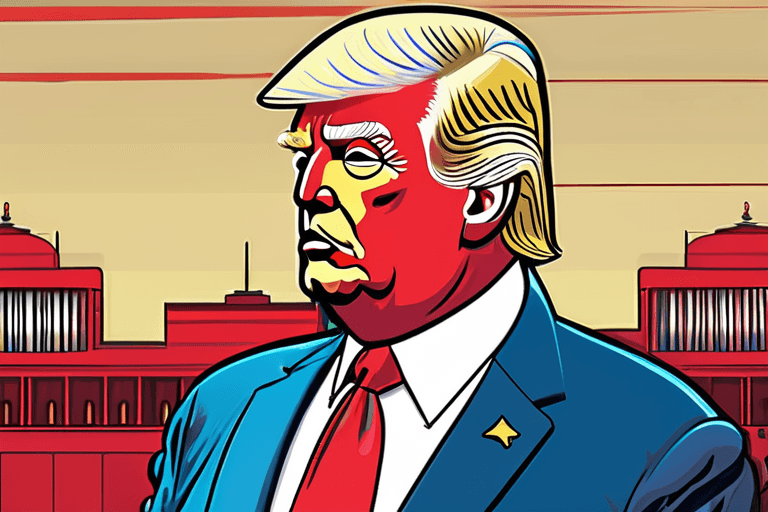
In early 2026, President Donald Trump's administration initiated an operation targeting Venezuela, culminating in the seizure of President Nicolás Maduro. Aboard Air Force One, en route from Florida to Washington D.C., Trump reportedly told reporters that the U.S. government was now in control of Venezuela and that American companies were prepared to exploit the country's oil reserves. He also suggested that other nations could face similar actions.
The operation, according to Trump's account, resulted in no U.S. casualties, but caused fatalities among Venezuelan and Cuban individuals. The events have sparked debate over whether this represents a new form of American imperialism or simply a continuation of traditional U.S. foreign policy, albeit presented without the usual diplomatic facade.
Critics of the administration's actions argue that the intervention in Venezuela constitutes an act of aggression and a violation of international law. They point to the potential for long-term destabilization in the region and the disregard for Venezuelan sovereignty. Supporters, however, contend that the U.S. is acting in its national interest, protecting its economic assets and preventing the spread of what they view as authoritarian regimes.
Policy analysts are divided on the implications of Trump's actions. Some believe that the administration is signaling a shift towards a more assertive foreign policy, reminiscent of historical imperialism. Others argue that it is merely a continuation of U.S. interventionism, stripped of its idealistic rhetoric. "This is not a new phenomenon," said Dr. Eleanor Vance, a professor of political science at Georgetown University. "The U.S. has a long history of intervening in Latin American affairs. What's different now is the lack of pretense."
The situation in Venezuela remains tense. The U.S. has yet to formally announce its long-term plans for the country, and the international community is closely watching the developments. The United Nations has called for a peaceful resolution to the crisis, but the future of Venezuela and its relationship with the United States remains uncertain.


















Discussion
Join the conversation
Be the first to comment