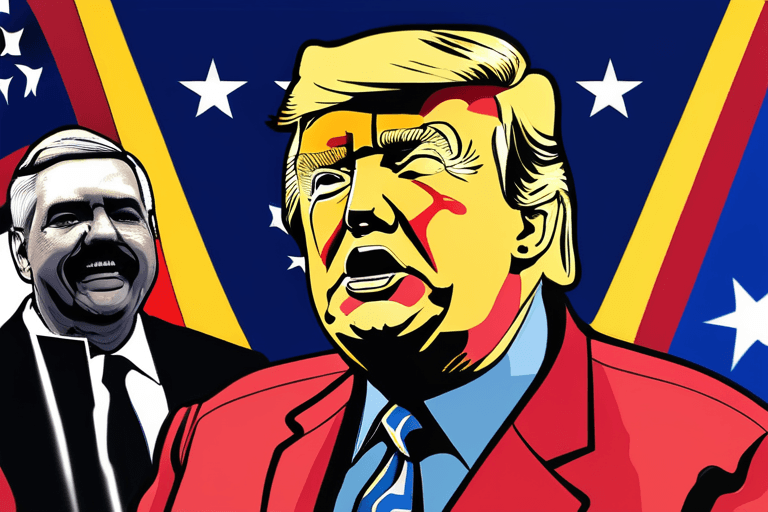
In early 2026, President Donald Trump's administration initiated an operation in Venezuela that resulted in the seizure of President Nicolás Maduro. Aboard Air Force One, en route from Florida to Washington D.C., Trump reportedly told reporters that the U.S. government was now in charge of Venezuela and that American companies were prepared to exploit the country's oil reserves.
Following the operation, which reportedly resulted in casualties among Venezuelan and Cuban individuals but no U.S. fatalities, Trump signaled that other nations could face similar actions. The events have sparked debate regarding the nature of U.S. foreign policy under the Trump administration, with some observers characterizing it as a form of neo-imperialism, while others argue it represents a continuation of traditional U.S. foreign policy objectives, albeit expressed with less diplomatic restraint.
The situation in Venezuela has a complex history, marked by political instability and economic challenges. Maduro's government faced accusations of authoritarianism and human rights abuses, while the country's economy suffered from hyperinflation and shortages of essential goods. The United States has long been involved in the region, with a history of intervention in Latin American affairs dating back to the 19th century.
Proponents of the neo-imperialism view argue that Trump's actions in Venezuela represent a departure from traditional U.S. foreign policy, characterized by a willingness to use military force and economic pressure to achieve strategic goals. Critics point to the potential for destabilizing the region and undermining international law.
Conversely, those who view Trump's actions as a continuation of existing policy argue that the U.S. has always sought to protect its interests in Latin America, particularly regarding access to natural resources and the prevention of hostile regimes. They contend that Trump's approach is simply more direct and less encumbered by diplomatic niceties.
The long-term implications of the Venezuelan operation remain uncertain. The U.S. government has yet to outline a clear plan for the country's future, and the international community is divided on how to respond. Further developments are expected as the situation unfolds.

















Discussion
Join the conversation
Be the first to comment