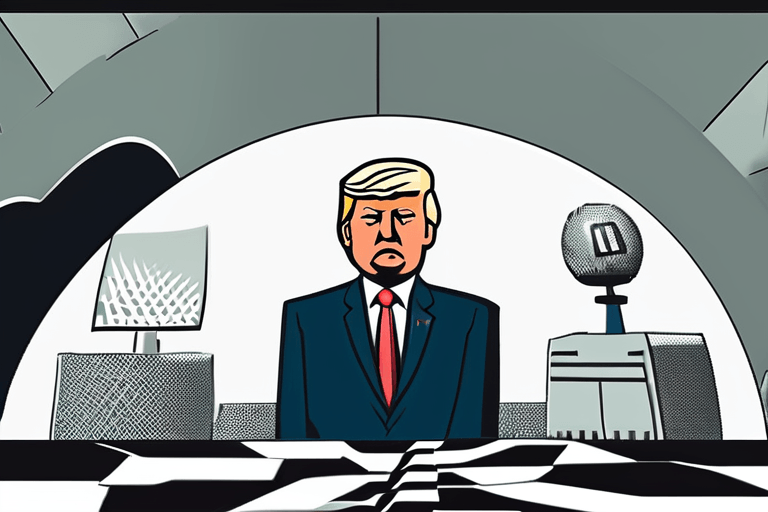
Military strikes launched during former U.S. President Donald Trump's second term are being contrasted with his attempts to cultivate a legacy as a peacemaker, raising questions about the consistency of his foreign policy approach. The juxtaposition highlights a complex and often contradictory period in international relations, particularly in regions where the U.S. has historically been involved in conflict.
Trump's efforts to position himself as a negotiator, particularly in relation to North Korea and the Middle East, were often at odds with the deployment of military force in other areas. This duality sparked debate among international relations analysts and policymakers regarding the true nature of his administration's foreign policy objectives. "There was a clear tension between the desire to withdraw from costly engagements and the perceived need to project strength," said Dr. Anya Sharma, a professor of international security at the London School of Economics.
The strikes, which targeted alleged terrorist training camps in Somalia and Iranian-backed militia groups in Iraq and Syria, were justified by the Trump administration as necessary to protect U.S. interests and deter further aggression. However, critics argued that these actions risked escalating tensions and undermining diplomatic efforts. "These strikes often had unintended consequences, fueling anti-American sentiment and potentially creating new opportunities for extremist groups to exploit," stated Omar Hassan, a political analyst based in Beirut.
The global context surrounding these events included ongoing conflicts in the Middle East, rising tensions with Iran, and concerns about North Korea's nuclear program. Culturally, the perception of U.S. foreign policy varied widely across different regions, with some viewing the U.S. as a necessary guarantor of security and others seeing it as an interventionist force.
From an international perspective, the Trump administration's actions were often viewed with skepticism by allies who favored a more multilateral approach to foreign policy. European leaders, in particular, expressed concern about the potential for unilateral military action to destabilize already fragile regions.
As of January 2026, the long-term consequences of these contrasting approaches remain a subject of ongoing debate. The Biden administration, which followed Trump, has since sought to re-engage with international partners and prioritize diplomatic solutions, but the legacy of the Trump era continues to shape the global landscape. Future developments will likely depend on the evolving geopolitical dynamics and the willingness of all parties to pursue peaceful resolutions to complex conflicts.



















Discussion
Join the conversation
Be the first to comment