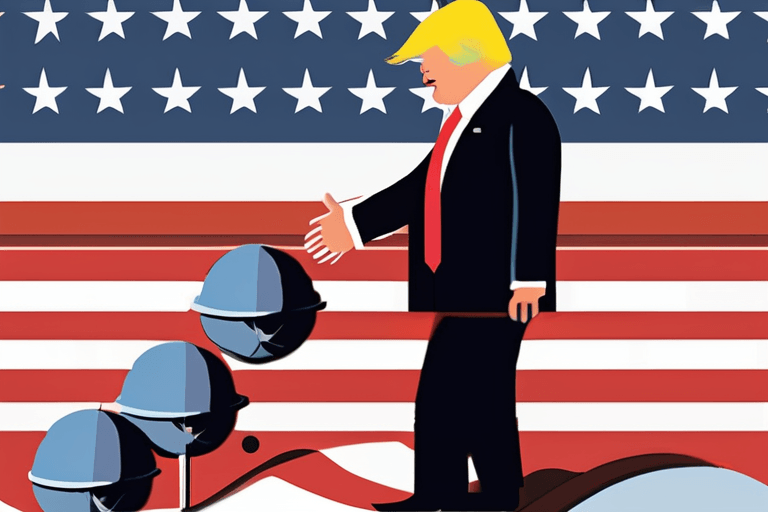
Military actions undertaken during Donald Trump's second term in office are being contrasted with his stated ambition to establish a legacy as a peacemaker on the global stage, according to a report published on January 11, 2026. The analysis examines the apparent contradiction between Trump's rhetoric and the deployment of military force during his presidency.
The report highlights instances where military strikes were authorized, without specifying the locations or targets, but framed within the context of Trump's broader foreign policy objectives. It suggests a tension between the desire to reduce American involvement in foreign conflicts and the perceived need to respond to perceived threats or maintain international stability.
Analysts have pointed to the complex nature of international relations, where the pursuit of peace can sometimes necessitate the use of force. "The international arena is not a simple dichotomy of war and peace," said Dr. Anya Sharma, a professor of international relations at the London School of Economics. "Sometimes, a show of strength is seen as a deterrent, a way to prevent larger conflicts from erupting."
The report also considers the cultural background against which these decisions were made. In many parts of the world, the United States is viewed as a dominant power with a responsibility to maintain order. However, this perception is not universally shared, and some nations view American military intervention with suspicion or outright hostility.
From an international perspective, the question of "stopping wars or waging them" is not unique to the Trump administration. Many world leaders have grappled with the dilemma of when and how to use military force in pursuit of peace. The report suggests that the Trump administration's approach was particularly notable for its apparent inconsistency, leading to confusion among allies and adversaries alike.
As of the date of the report, the long-term consequences of these actions remain uncertain. The analysis concludes by emphasizing the need for continued scrutiny of American foreign policy and its impact on global peace and security.



















Discussion
Join the conversation
Be the first to comment