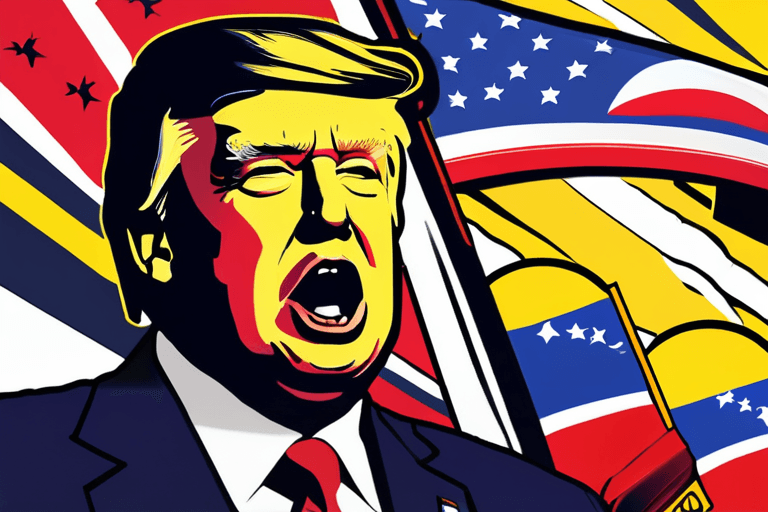
U.S. President Donald Trump asserted control over Venezuela in early 2026 following the abduction of Venezuelan President Nicolás Maduro, claiming his government was now in charge and U.S. companies were prepared to exploit the country's oil reserves. The events, which unfolded after an attack on Venezuela, have sparked debate about whether the U.S. is entering a new era of imperialism or simply engaging in standard foreign policy, albeit stripped of any pretense.
Trump, aboard Air Force One en route from Florida to Washington D.C., reportedly shared details of Maduro's abduction with reporters, boasting of the operation's success, which he said was achieved without any U.S. casualties. He then warned other nations they could face similar intervention.
The situation has ignited a heated discussion among political analysts and international relations experts. Some view Trump's actions as a clear indication of renewed American imperialism, citing the forceful intervention in a sovereign nation and the stated intention to exploit its natural resources. Others argue that the U.S. has a long history of interventionist foreign policy, particularly in Latin America, and that Trump's approach is simply a more direct and less veiled version of this established practice.
"This is not a departure from U.S. foreign policy, but rather an amplification of its inherent tendencies," said Dr. Elena Rodriguez, a professor of political science at Georgetown University, who specializes in U.S.-Latin American relations. "The difference is the lack of diplomatic finesse and the explicit articulation of economic interests."
Critics of the administration's actions point to potential violations of international law and the potential for destabilizing the region. Supporters, however, argue that Maduro's government was authoritarian and corrupt, and that the U.S. intervention was necessary to restore democracy and stability.
The Venezuelan government, now operating in exile, has condemned the U.S. intervention as an act of aggression and a violation of international sovereignty. Several international organizations, including the United Nations, have expressed concern over the situation and called for a peaceful resolution.
The U.S. government has yet to formally announce specific policies regarding Venezuela's oil industry, but Trump's statements suggest a significant shift in control and access. The long-term consequences of this intervention remain to be seen, but the events have undoubtedly raised questions about the future of U.S. foreign policy and its role in the international arena. The situation is ongoing, with the U.S. government working to establish a new government in Venezuela while facing international condemnation and potential economic repercussions.


















Discussion
Join the conversation
Be the first to comment