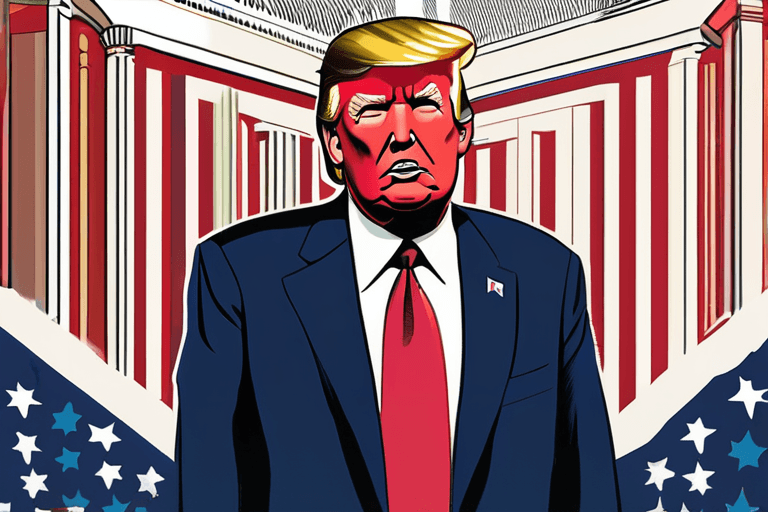
In early 2026, President Donald Trump's administration initiated an action against Venezuela, culminating in the apprehension of President Nicolás Maduro. Aboard Air Force One, en route from Florida to Washington D.C., Trump reportedly shared details with reporters regarding the operation, asserting U.S. control over Venezuela and the imminent involvement of U.S. companies in extracting the nation's oil resources.
Following the Venezuelan intervention, Trump signaled potential similar actions against other nations. The move has sparked debate regarding the nature of U.S. foreign policy under the Trump administration, with some observers labeling it as a form of neo-imperialism, while others argue it represents a more transparent continuation of traditional U.S. foreign policy objectives.
Critics of the administration's actions argue that the intervention in Venezuela constitutes an act of aggression aimed at securing economic and political dominance. They point to the historical context of U.S. involvement in Latin America, citing instances of intervention and support for regimes aligned with U.S. interests. "This is not a new phenomenon, but a continuation of a long history of U.S. interference in the region," said Dr. Eva Morales, a professor of Latin American studies at Georgetown University.
Conversely, supporters of the administration's approach contend that it is a necessary step to protect U.S. interests and promote democracy in the region. They argue that Maduro's government was authoritarian and corrupt, and that the U.S. had a responsibility to intervene. "We cannot stand idly by while dictators oppress their people," stated Senator John Davis (R-TX) in a press release. "The United States has a moral obligation to defend freedom and democracy around the world."
Policy analysts note that the situation is complex, with multiple factors influencing the administration's decision-making. Economic considerations, such as access to Venezuelan oil reserves, undoubtedly played a role, as did geopolitical concerns regarding the influence of countries like Cuba and Russia in the region. The long-term implications of the U.S. action in Venezuela remain uncertain. The international community has reacted with a mix of condemnation and support, and the future of U.S.-Venezuelan relations is unclear. The situation is ongoing, and further developments are expected in the coming weeks and months.



















Discussion
Join the conversation
Be the first to comment