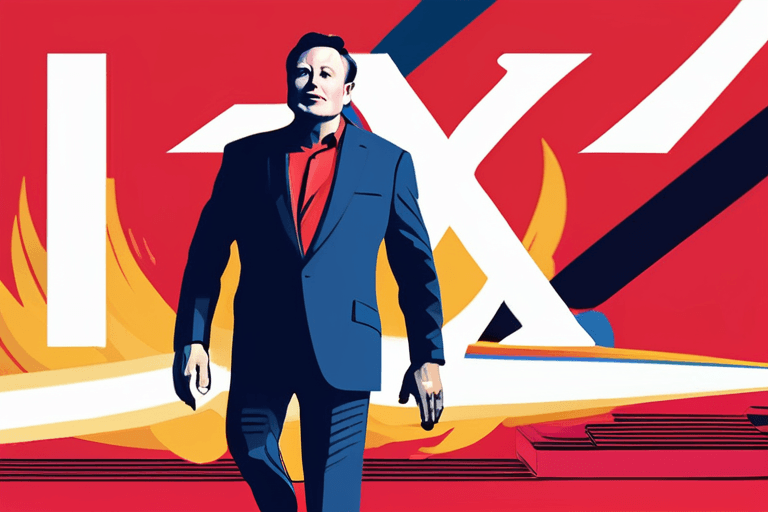
On January 4th, Elon Musk, owner of the social media platform X, responded to a post by Iran's Supreme Leader Ayatollah Ali Khamenei, and on Saturday, X changed the Iranian flag emoji on the site from the one used since the Islamic revolution in 1979 to the pre-revolution flag featuring a lion and sun, prompting questions about the potential impact of this action on the ground in Iran. The pre-1979 Iranian flag is a symbol closely associated with the monarchy but has a 'contentious' status, according to analysts.
Musk's actions come amid intensifying protests in Iran. His initial response to Khamenei's post, suggesting in Farsi that the leader was delusional, preceded the flag change. Some demonstrators both inside and outside of Iran have been observed waving the pre-1979 flag as a form of protest against the current regime.
The change on X has garnered some support, though the extent and nature of that support were not detailed in the provided source material. The potential impact of a social media platform altering a nation's flag emoji is complex. While it may serve as a symbolic gesture of support for protestors, its practical effect on the political landscape within Iran remains uncertain.
The move raises questions about the role of social media platforms in international politics and their potential influence on internal conflicts within nations. The decision by X to change the flag emoji could be interpreted as taking a stance in the ongoing protests, potentially influencing public opinion both within and outside of Iran.
As of the publication date of the source material, January 11, 2026, the long-term consequences of X's actions were yet to be seen. It remains to be determined whether this symbolic gesture will translate into tangible support for the protest movement or further escalate tensions between Iran and the platform.

















Discussion
Join the conversation
Be the first to comment