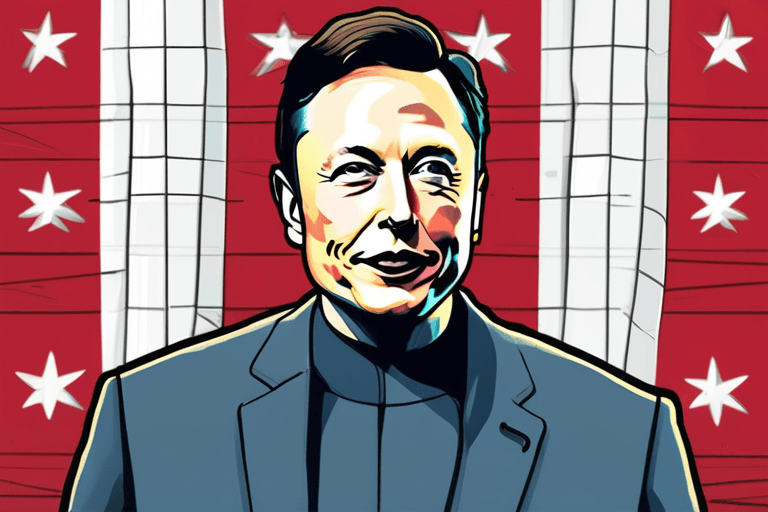
On January 4th, Elon Musk, owner of the social media platform X, responded to a post by Iran's Supreme Leader Ayatollah Ali Khamenei by suggesting in Farsi that he was delusional, and on Saturday, the platform changed the Iranian flag emoji from the one used since the 1979 Islamic revolution to the pre-revolution flag featuring a lion and sun. The change comes amid intensifying protests in Iran, where some demonstrators both inside and outside the country have been waving the pre-1979 flag as a symbol of opposition to the current regime.
The pre-1979 Iranian flag, analysts say, is closely associated with the monarchy and carries a contentious status within Iran. While some view it as a symbol of national identity predating the Islamic Republic, others associate it with the Pahlavi dynasty and its perceived authoritarian rule.
Musk's actions have garnered support from some who view it as a symbolic gesture of solidarity with the protesters. However, the practical impact of this digital flag change on the ground in Iran remains uncertain. The move raises questions about the role of social media platforms in international political discourse and the potential for such actions to influence real-world events.
The flag change on X could be interpreted as a form of digital activism, potentially amplifying the voices of dissent within Iran and signaling support from outside the country. However, it is important to note that access to X and other social media platforms is heavily restricted in Iran, limiting the reach and impact of this change within the country itself.
Justin Salhani reported that the move could be seen as a symbolic gesture of support for Iranian protesters, but its actual effect on the ground is likely to be limited due to restricted access to the platform within Iran. The situation remains fluid, and the long-term consequences of Musk's actions are yet to be seen.


















Discussion
Join the conversation
Be the first to comment