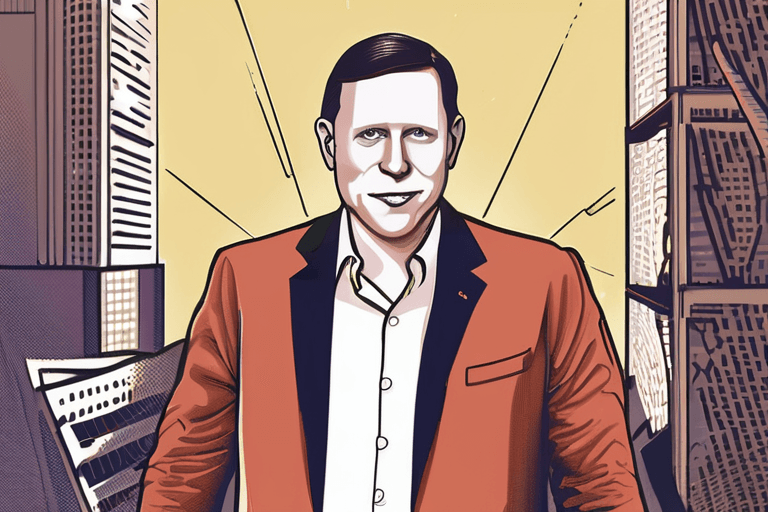
A chill ran through Silicon Valley in the final days of 2023, not from the California winter, but from the looming specter of a wealth tax. As champagne corks popped and resolutions were made, Peter Thiel, the influential venture capitalist and Palantir chairman, quietly made a $3 million donation to a committee opposing the proposed initiative. This wasn't just another political contribution; it was a shot across the bow in what promises to be a high-stakes battle over the future of wealth and taxation in California.
The proposed wealth tax, aimed at the state's wealthiest residents, has ignited a fierce debate about economic fairness and the role of taxation in a rapidly evolving technological landscape. Supporters argue that it's a necessary step to address income inequality and fund vital public services. Opponents, like Thiel, see it as a punitive measure that could drive innovation and investment out of the state.
Thiel's $3 million donation, disclosed on December 29th, went to the California Business Roundtable, a powerful state business lobby. While not specifically earmarked for the wealth tax measure, the contribution will undoubtedly bolster the Roundtable's efforts to combat the proposal and other similar tax initiatives. Sources familiar with the matter suggest this is just the opening salvo, with more substantial contributions expected from other Silicon Valley leaders in the lead-up to the 2026 ballot.
The AI angle here is subtle but significant. The wealth that fuels this debate is, in many ways, a product of the AI revolution. Companies like Palantir, co-founded by Thiel, are at the forefront of developing and deploying AI technologies that are reshaping industries and creating immense wealth. This raises fundamental questions about how the benefits of AI should be distributed and who should bear the responsibility for addressing its potential societal impacts.
"AI is a double-edged sword," explains Dr. Anya Sharma, a professor of economics at Stanford University specializing in the societal impact of technology. "On the one hand, it has the potential to create unprecedented wealth and solve some of humanity's most pressing challenges. On the other hand, it could exacerbate existing inequalities and lead to job displacement. The wealth tax debate is, in essence, a reflection of these anxieties."
The implications extend beyond California. The outcome of this battle could set a precedent for other states grappling with similar issues. As AI continues to drive economic growth and reshape the landscape of wealth creation, the debate over taxation and wealth distribution will only intensify.
The use of AI in political campaigns is also a growing concern. Sophisticated AI algorithms can be used to target voters with personalized messages, spread misinformation, and even manipulate public opinion. The California Business Roundtable, and indeed any organization involved in this debate, could leverage AI to amplify their message and influence the outcome of the election.
Looking ahead, the fight over the California wealth tax is likely to be a long and arduous one. It will involve not only political maneuvering and financial contributions but also a battle for public opinion. The role of AI in shaping this debate, both in terms of its economic impact and its potential use in political campaigning, will be crucial to watch. Thiel's $3 million donation is just the beginning of a story that will have far-reaching consequences for the future of wealth, taxation, and the role of technology in society.
















Discussion
Join the conversation
Be the first to comment