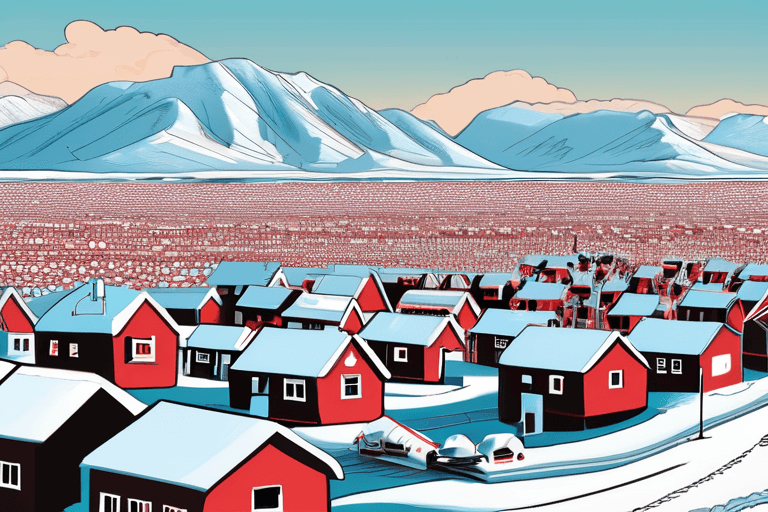
A great power competition is intensifying in the Arctic, extending beyond reported U.S. interest in Greenland to other strategically important locations. The Norwegian archipelago of Svalbard, governed by a century-old treaty granting access to nearly all nations, has become a focal point of concern as Norway seeks to tighten its grip amid perceived meddling from Russia and China.
The treaty, dating back to World War I, allows individuals from signatory nations to reside and conduct business on Svalbard visa-free. For decades, this arrangement fostered international cooperation, particularly in scientific research. Researchers from various countries collaborated at Svalbard's international research station, engaging in cultural exchanges and collaborative projects.
However, Norway is now taking steps to assert its sovereignty more firmly over Svalbard and mitigate foreign influence. Recent measures include stripping voting rights from foreigners residing on the islands and blocking land sales to foreign buyers. These actions signal a shift away from the era of open international collaboration that once characterized the region.
The increased scrutiny of foreign activities on Svalbard reflects broader geopolitical tensions in the Arctic. The region's strategic importance has grown due to its abundant natural resources and its potential as a shipping route as ice caps melt. Russia has been expanding its military presence in the Arctic, while China has been investing in infrastructure and research projects.
Norway's tightening control over Svalbard is viewed by some as a necessary step to protect its national interests and security. Others express concern that these measures could undermine the spirit of international cooperation that has long defined the region. The future of Svalbard as a geopolitical unicorn remains uncertain as the Arctic region becomes an arena for great power competition.











Discussion
Join the conversation
Be the first to comment