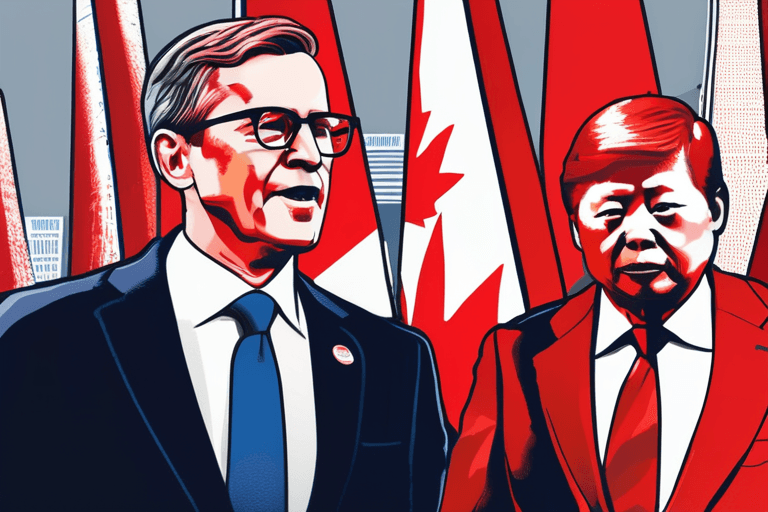
Canadian Prime Minister Mark Carney arrived in Beijing this week, marking the first visit by a Canadian leader to China in nearly a decade, as Ottawa seeks to recalibrate its trade strategy amid the ongoing global trade war and the "America First" policies of the Trump administration. Carney's visit is framed as an attempt to stabilize the relationship between the two countries, which has experienced significant strain in recent years.
The trip comes at a time of shifting global economic and political alliances, prompting Canada to reassess its international partnerships. During Canada's recent spring election campaign, Carney himself identified China as the country's biggest geopolitical risk, citing concerns over election interference and challenges to Canada's Arctic claims. Despite these past concerns, the Prime Minister's visit signals a desire to mend the fractured relationship with the global superpower.
The impetus for this diplomatic outreach stems, in part, from the trade disruptions caused by the Trump administration's protectionist policies. The "America First" agenda has forced Canada to diversify its trade relationships and explore new markets beyond its traditional reliance on the United States. China, with its vast consumer market and growing economic influence, represents a significant opportunity for Canadian businesses seeking to mitigate the impact of trade tensions elsewhere.
The relationship between Canada and China has been fraught with challenges, including disputes over trade practices, human rights concerns, and the detention of Canadian citizens in China. These issues have cast a shadow over bilateral relations and complicated efforts to foster closer cooperation.
Carney's visit will likely involve discussions on a range of topics, including trade, investment, and geopolitical security. Both sides will be looking to find common ground and establish a framework for future cooperation, despite the existing challenges. The outcome of the visit remains uncertain, but it underscores the growing importance of China in the global economy and the need for Canada to navigate a complex and evolving international landscape.

















Discussion
Join the conversation
Be the first to comment