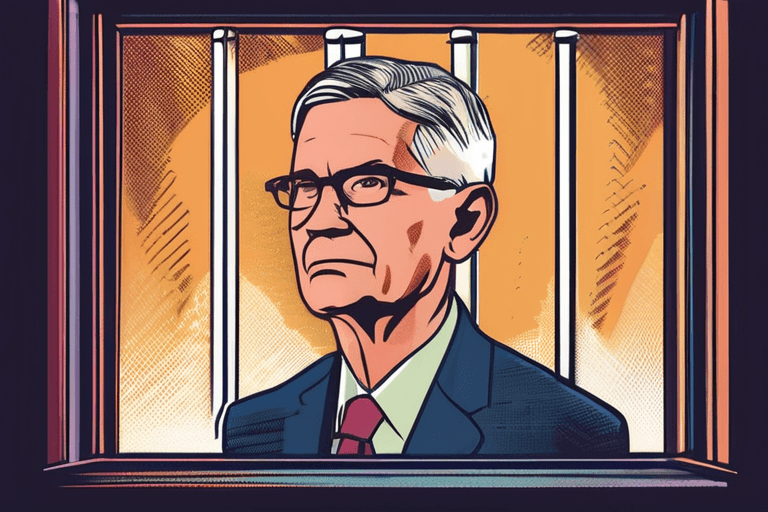
Federal Reserve Chair Jerome Powell recently made an unscheduled video statement on social media amid an ongoing dispute with President Trump regarding interest rates and the independence of the central bank. The unusual move by Powell, as reported by Reuters Economics Editor Faisal Islam, highlights the escalating tensions between the executive branch and the traditionally independent Federal Reserve.
The dispute, ostensibly centered around the cost of a renovation project at the Federal Reserve, the US equivalent of the Bank of England, has evolved into a broader conflict over monetary policy. President Trump has repeatedly criticized Powell and attempted to influence interest rate decisions through public statements and appointments of economists aligned with his views. The president even inspected the Fed's building.
This interference raises concerns about the potential for political influence to undermine the Fed's independence, which is crucial for maintaining economic stability. Central bank independence is a cornerstone of modern monetary policy, designed to insulate interest rate decisions from short-term political pressures. The goal is to allow the Fed to focus on long-term economic goals, such as price stability and full employment, without fear of political retribution.
The use of social media by Powell to address the public directly is a novel approach, especially considering the sensitive nature of the issues at hand. Islam noted his initial reaction to Powell's video was to question its authenticity, wondering "Is this an AI deepfake?" This reaction underscores the growing societal awareness and concern surrounding AI-generated media and the potential for manipulation. Deepfakes, created using sophisticated AI techniques, can convincingly mimic a person's appearance and voice, making it increasingly difficult to distinguish between real and fabricated content. The implications of deepfakes extend beyond political discourse, potentially impacting areas such as journalism, law enforcement, and national security.
The incident also highlights the evolving role of central bankers in the digital age. As communication technologies advance, central banks are exploring new ways to engage with the public and enhance transparency. However, the use of social media also presents challenges, including the risk of misinterpretation and the potential for market volatility.
The current status of the spat remains unresolved. The next developments will likely involve further statements from both President Trump and Chair Powell, as well as continued scrutiny from financial markets and the public. The long-term implications of this conflict for the independence of the Federal Reserve and the stability of the US economy remain to be seen.














Discussion
Join the conversation
Be the first to comment