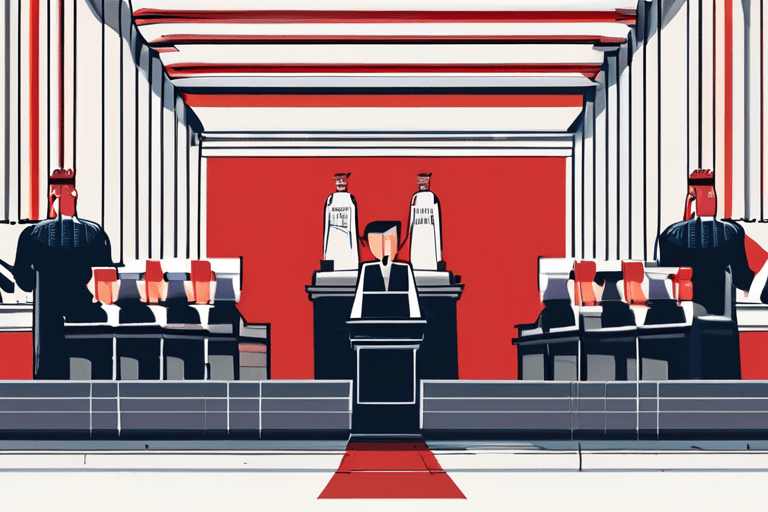
U.S. President Donald Trump warned of a "complete mess" if the Supreme Court strikes down his tariffs, expressing his concerns in a social media post on Monday ahead of an impending ruling. The ruling, anticipated as early as Wednesday, could force the administration to address potentially significant refund claims from businesses.
Trump's post on Truth Social highlighted the high stakes of the legal challenge to his trade strategy, which has been contested by small businesses and a coalition of U.S. states. These groups argue that the president exceeded his authority in imposing the tariffs, which were initially announced last April. Trump stated that if the Supreme Court does not uphold the tariffs, "WE'RE SCREWED," emphasizing the potential ramifications for his administration's trade policies.
The core of the legal challenge revolves around the interpretation of presidential authority in trade matters. Legal experts explain that the plaintiffs are arguing that Trump's tariffs bypassed congressional approval, a power traditionally reserved for the legislative branch. This challenge tests the limits of executive power in setting trade policy, a debate that has gained prominence with the increasing use of tariffs as a tool of foreign policy.
The potential for widespread refund claims stems from the tariffs already collected, which businesses argue have unfairly burdened them. Calculating and distributing these refunds would be a complex undertaking, as Trump himself acknowledged, potentially involving years of administrative work to determine the appropriate recipients and amounts.
The Supreme Court's decision will not only impact the immediate financial implications for businesses but also set a precedent for future trade policy. A ruling against the tariffs could limit the president's ability to unilaterally impose such measures, potentially requiring greater congressional involvement in trade negotiations. Conversely, upholding the tariffs would reinforce executive power in trade matters, potentially leading to further use of tariffs as a policy tool.
The case underscores the ongoing tension between executive authority and congressional oversight in trade policy, a debate that is likely to continue regardless of the Supreme Court's decision. The ruling is expected to have far-reaching implications for both domestic businesses and international trade relations.













Discussion
Join the conversation
Be the first to comment