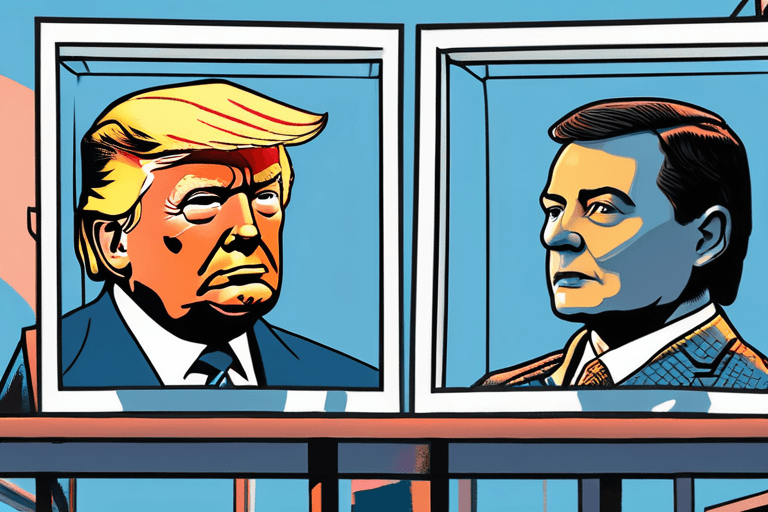
Federal Reserve Chair Jerome Powell recently made an unscheduled video statement on social media amid a long-running dispute with President Trump over interest rate policy. The unusual move by the world's top central banker raised questions, with some initially wondering if the video was an AI deepfake, according to Reuters Economics Editor Faisal Islam.
The backdrop to this event is President Trump's repeated attempts to influence the Federal Reserve's independent setting of interest rates. Trump has publicly criticized Powell and appointed economists aligned with his views, seemingly to lower U.S. interest rates. This interference comes alongside a dispute, ostensibly, over the cost of a renovation project at the Federal Reserve, the U.S. equivalent of the Bank of England, with the President even inspecting the building personally.
The concern about deepfakes highlights the growing sophistication and potential misuse of artificial intelligence. Deepfakes are AI-generated videos or audio recordings that convincingly depict someone saying or doing something they did not actually say or do. These are created using machine learning techniques, specifically deep learning, where algorithms analyze vast amounts of data to learn and replicate a person's likeness and voice. The technology has advanced rapidly, making it increasingly difficult to distinguish between real and fake content.
The implications of deepfakes extend beyond political disputes. They can be used to spread misinformation, damage reputations, and even manipulate financial markets. The ability to create realistic fake content poses a significant challenge to trust and credibility in the digital age.
Recent developments in AI include improved detection methods for deepfakes. Researchers are developing algorithms that can analyze subtle inconsistencies in videos, such as unnatural eye movements or lighting, to identify manipulated content. However, the technology is constantly evolving, creating an ongoing arms race between deepfake creators and detectors.
The Federal Reserve's independence is crucial for maintaining economic stability. Political interference in monetary policy can undermine confidence in the central bank and lead to unpredictable economic outcomes. Powell's decision to address the public directly underscores the importance of transparency and communication in navigating these challenges. The situation remains ongoing, and the future relationship between the President and the Federal Reserve chair will likely continue to be closely watched by financial markets and policymakers alike.

















Discussion
Join the conversation
Be the first to comment