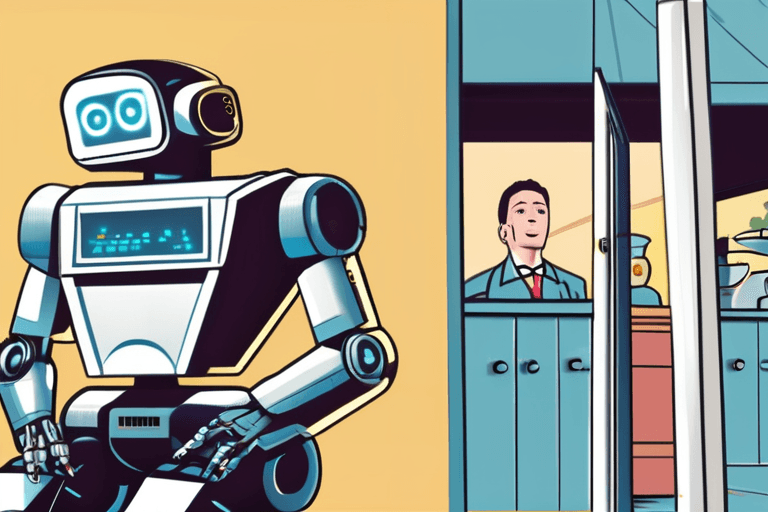
Domestic robots capable of performing multiple household tasks are poised to enter homes this year, fueled by advancements in artificial intelligence. For decades, the concept of a robot butler has been a futuristic dream, but now, companies in Silicon Valley are rapidly developing and training robots like Eggie, NEO, Isaac, and Memo to handle chores such as folding laundry, loading dishwashers, and cleaning.
These robots represent a significant leap in AI-driven automation. Tangible AI, a startup, demonstrated Eggie's capabilities, showing the robot hanging up a jacket, stripping a bed, and cleaning up spills. While Eggie is currently controlled by a human, the demonstration highlights the increasing dexterity and agility of these machines.
The development of domestic robots relies heavily on advancements in several key areas of AI. Computer vision allows robots to "see" and understand their environment, enabling them to navigate complex spaces and identify objects. Natural language processing (NLP) allows them to understand and respond to human commands. Machine learning algorithms enable robots to learn from experience, improving their performance over time.
The implications of widespread domestic robot adoption are far-reaching. Proponents argue that these robots could free up human time for more creative and fulfilling pursuits. However, concerns exist about potential job displacement for domestic workers and the ethical considerations of relying on AI for personal care.
The arrival of multi-purpose domestic robots raises questions about the future of work and the relationship between humans and technology. As these robots become more sophisticated, it is crucial to consider the societal impact and ensure that their development and deployment are guided by ethical principles.
NEO, a domestic robot, is scheduled to launch to customers this year, marking a significant step toward the integration of robots into everyday life. While challenges remain in terms of cost, reliability, and safety, the progress made in recent years suggests that the era of the domestic robot is rapidly approaching.










Discussion
Join the conversation
Be the first to comment