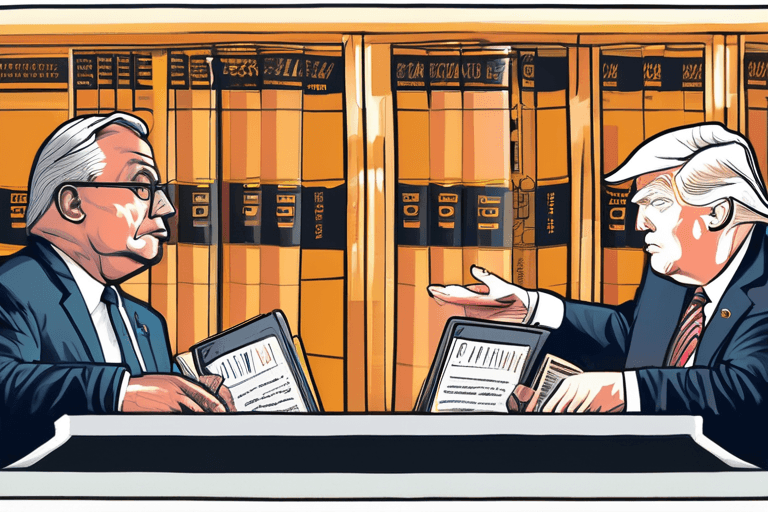
Federal Reserve Chair Jerome Powell recently made an unscheduled video statement on social media amid a long-running dispute with President Trump over interest rate policy. The unusual move, as reported by Reuters Economics Editor Faisal Islam, raised initial concerns about the authenticity of the video, prompting questions about potential AI deepfakes.
The conflict stems from President Trump's attempts to influence the Federal Reserve's independent setting of interest rates, primarily through public criticism and appointments of economists aligned with his views. Trump's actions appear aimed at lowering U.S. interest rates, despite the Fed's traditionally independent role in managing monetary policy. The dispute has even extended to the cost of a renovation project at the Federal Reserve, with President Trump inspecting the work in person.
The implications of such interference are significant, particularly in an era where AI-generated content can blur the lines between reality and fabrication. Deepfakes, a type of AI-synthesized media, can convincingly mimic a person's appearance and voice, raising concerns about the potential for manipulation and disinformation. The fact that Powell's video prompted initial deepfake suspicions underscores the growing awareness and anxiety surrounding this technology.
The incident highlights the challenges of maintaining trust in information sources in the age of AI. As AI technology advances, the ability to detect deepfakes becomes increasingly crucial. Researchers are developing sophisticated algorithms to identify subtle inconsistencies and anomalies in AI-generated content, but the technology is constantly evolving, creating an ongoing arms race between deepfake creators and detectors.
The current status of the spat between Trump and Powell remains unresolved. The Federal Reserve continues to operate independently, but the President's ongoing criticism could potentially undermine public confidence in the institution. The next developments will likely depend on future interest rate decisions by the Fed and the President's response to those decisions.











Discussion
Join the conversation
Be the first to comment