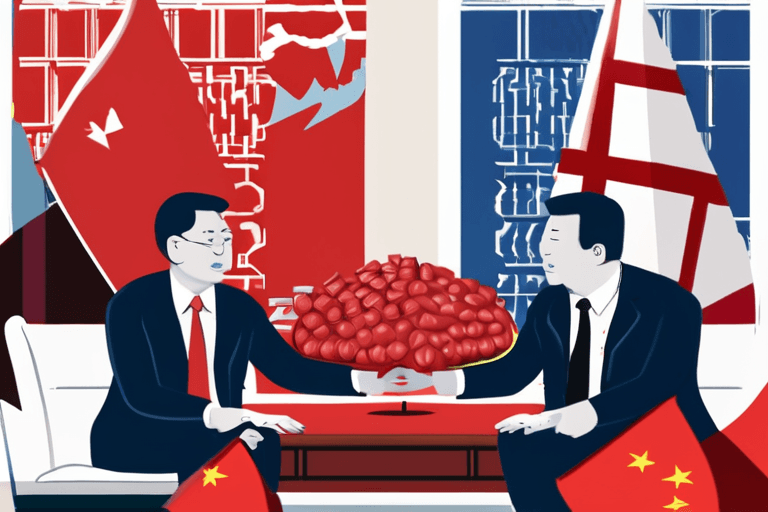
Canadian Prime Minister Mark Carney arrived in Beijing this week, marking the first visit by a Canadian leader to China in nearly a decade. The trip comes as Canada grapples with the economic fallout from ongoing global trade tensions, particularly those spurred by the "America First" agenda.
Carney has characterized the visit as an effort to stabilize the relationship between the two countries, which has been strained in recent years. Speaking at a debate during Canada's spring election campaign, Carney identified China as Canada's biggest geopolitical risk, citing concerns over election interference and challenges to Canada's Arctic claims.
The impetus for the visit stems from a broader re-evaluation of Canada's trade strategy in light of shifting global alliances. The "America First" policies, while primarily aimed at reshaping U.S. trade relationships, have had a ripple effect, prompting countries like Canada to diversify their economic partnerships. This has led to a renewed focus on strengthening ties with China, a global economic superpower.
The relationship between Canada and China has faced significant hurdles in recent years. Disputes over trade practices, human rights concerns, and the detention of Huawei executive Meng Wanzhou in Vancouver have contributed to a period of diplomatic frostiness. China's economic and political influence on the world stage makes it a crucial partner for Canada. As such, the visit signals a willingness to navigate these challenges and seek common ground.
The Prime Minister's office has indicated that discussions will focus on trade, climate change, and regional security. The visit is seen as a crucial step in recalibrating Canada's foreign policy in a rapidly changing world.


















Discussion
Join the conversation
Be the first to comment