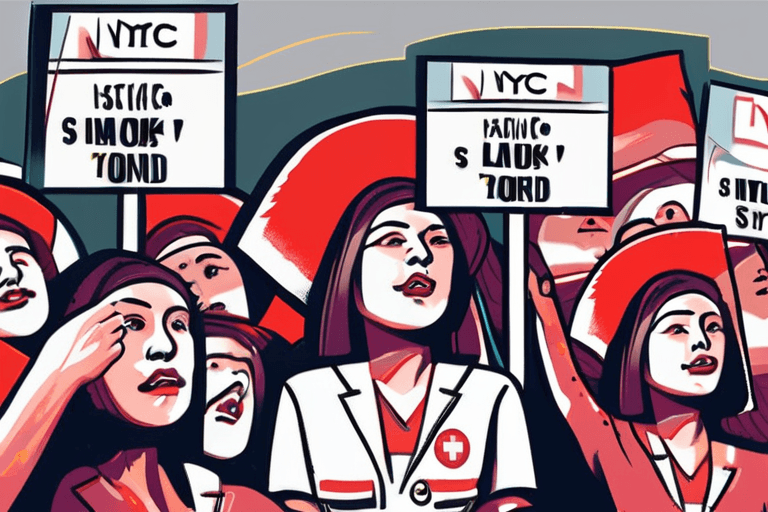
Nearly 15,000 nurses in New York City initiated a strike on Monday, citing demands for increased compensation, improved staffing ratios, and enhanced security protocols within hospital environments. The work stoppage, one of the largest healthcare strikes in recent decades, prompted Mayor Zohran Mamdani to visit nurses picketing outside an affected hospital.
Mamdani voiced his support for the striking nurses and criticized hospital administrators' compensation packages, arguing that resources should be prioritized for frontline healthcare workers. "These nurses are the backbone of our healthcare system," Mamdani stated during his visit. "Their demands for fair wages and safe working conditions are not unreasonable, especially when we see the exorbitant salaries being paid to hospital executives."
The strike highlights a growing concern within the nursing profession regarding burnout and patient safety. Studies published in the Journal of Nursing Administration have consistently linked inadequate staffing levels to increased rates of medical errors and adverse patient outcomes. Dr. Emily Carter, a professor of public health at Columbia University, commented on the potential impact of the strike. "Prolonged strikes can strain hospital resources and potentially affect access to care for vulnerable populations," Carter explained. "However, addressing the underlying issues of nurse staffing and working conditions is crucial for long-term improvements in healthcare quality."
The nurses' union, the New York State Nurses Association (NYSNA), has been in contract negotiations with several major hospital systems for months. The primary sticking points include salary increases that reflect the rising cost of living in New York City and enforceable staffing ratios to ensure adequate patient care. The union argues that current staffing levels often force nurses to care for an unsustainably high number of patients, increasing the risk of errors and compromising patient safety.
Hospital administrators, in response, have stated that they are committed to reaching a fair agreement with the nurses but also face financial constraints. They argue that the proposed salary increases and staffing mandates would place an unsustainable burden on hospital budgets, potentially leading to service cuts.
As of Tuesday, negotiations were ongoing between NYSNA and hospital representatives, with federal mediators assisting in the discussions. The strike continues to impact patient care at several hospitals across the city, with some facilities diverting ambulances and postponing elective procedures. The long-term effects of the strike on the New York City healthcare system remain to be seen, but experts emphasize the importance of finding a resolution that addresses both the nurses' concerns and the financial realities of hospital operations.

















Discussion
Join the conversation
Be the first to comment