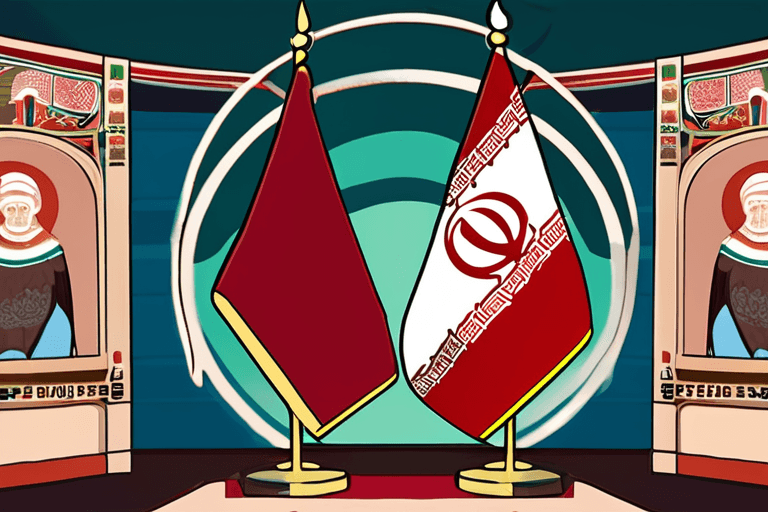
Iran stated on Monday its readiness for both conflict and negotiation, following warnings from U.S. President Donald Trump regarding potential intervention in response to the government's crackdown on opposition protests. Speaking at a conference of foreign ambassadors in Tehran, Foreign Minister Abbas Araghchi said, "We are not looking for war, but we are prepared for war, even more prepared than the previous war." His remarks, broadcast on state television, appeared to reference the 12-day conflict with Israel in June, during which the United States bombed Iranian nuclear facilities.
Araghchi added, "We are also ready for negotiations, but negotiations that are fair, with equal rights and mutual respect." These statements come amid heightened tensions in the region, fueled by concerns over Iran's nuclear program and its involvement in regional conflicts.
The recent unrest in Iran began two weeks ago, prompting a government response that has drawn international condemnation. Hours after Araghchi's comments, Iranian state media broadcast images of large pro-government rallies and funeral processions for security personnel killed in the recent disturbances. Ayatollah Ali Khamenei, Iran's supreme leader, described the rallies as "a warning to [America]," according to state media reports.
Iran's relationship with the United States has been strained since the U.S. withdrew from the 2015 nuclear deal, formally known as the Joint Comprehensive Plan of Action (JCPOA), and reimposed sanctions. The JCPOA, negotiated between Iran, the United States, and other world powers, aimed to limit Iran's nuclear program in exchange for sanctions relief. The U.S. withdrawal and subsequent sanctions have significantly impacted Iran's economy and fueled domestic discontent.
The potential for U.S. intervention in Iran raises concerns among international observers, given the already volatile geopolitical landscape in the Middle East. Any military action could have far-reaching consequences, potentially destabilizing the region further and drawing in other actors. The European Union, along with other signatories to the JCPOA, has been working to salvage the agreement and de-escalate tensions between Iran and the United States. However, these efforts have faced significant challenges in light of the ongoing tensions and the U.S. position. The situation remains fluid, with the international community closely monitoring developments in Iran and the potential for further escalation.








Discussion
Join the conversation
Be the first to comment