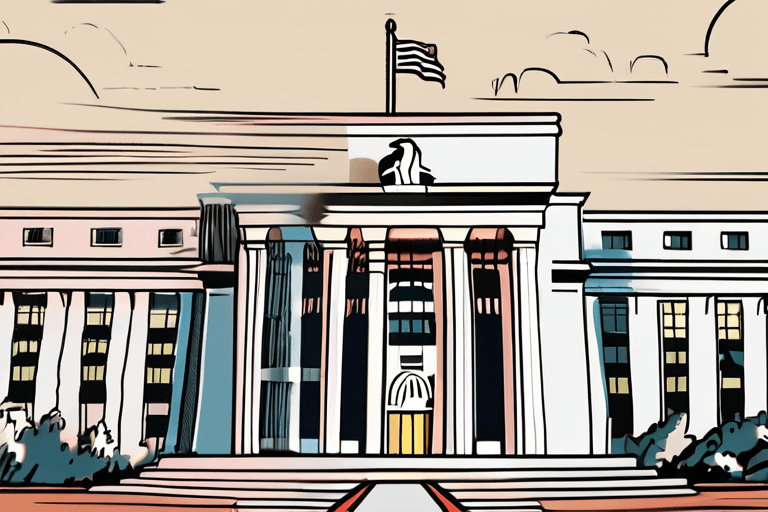
John C. Williams, president of the Federal Reserve Bank of New York, signaled Monday that the central bank is in no rush to cut interest rates further, suggesting the Fed is likely to maintain current borrowing costs at its upcoming meeting later this month. Williams, speaking to the Council on Foreign Relations, indicated the Fed believes it is well-positioned to support the labor market and bring inflation back down to its 2 percent target.
The remarks reinforce expectations that the Federal Reserve will hold steady after implementing three quarter-point rate cuts last year. The current interest rate range, between 3.5 percent and 3.75 percent, is considered by Williams to be near a neutral level, meaning it neither stimulates nor hinders economic growth. He expressed optimism about the economic outlook, projecting the unemployment rate to remain stable around its present 4.4 percent.
The Federal Reserve's monetary policy decisions are crucial for managing inflation and promoting full employment. The central bank uses interest rate adjustments as a primary tool to influence economic activity. Lowering rates typically encourages borrowing and spending, stimulating growth, while raising rates aims to curb inflation by cooling down the economy.
The Fed's dual mandate, as defined by Congress, is to maintain price stability and maximize employment. Achieving these goals often requires careful balancing, as measures to control inflation can sometimes negatively impact job creation, and vice versa. The current economic landscape presents a complex challenge, with inflation showing signs of easing but still above the Fed's target, and the labor market remaining relatively strong.
Looking ahead, the Federal Reserve will continue to monitor economic data closely, including inflation figures, employment reports, and indicators of economic growth. These data points will inform the central bank's future policy decisions regarding interest rates. The Federal Open Market Committee (FOMC), the Fed's policy-making body, is scheduled to meet at the end of the month to assess the economic situation and determine the appropriate course of action.













Discussion
Join the conversation
Be the first to comment