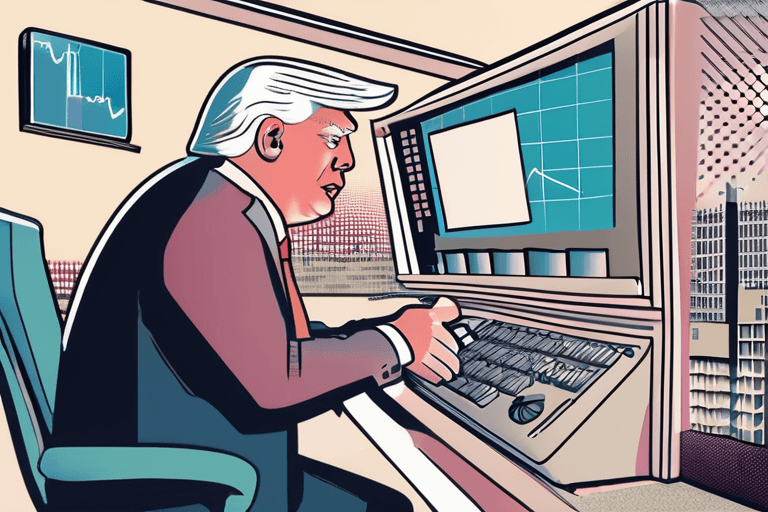
President Trump, when questioned by reporters from The New York Times last week about economic anxieties among Americans, asserted the economy was "unbelievable" and attributed high prices to his predecessor. He also dismissed polling data and touted his popularity on TikTok during the exchange last Wednesday.
Trump stated that low-income workers were the greatest beneficiaries of his first term economy, further claiming that blue-collar workers are currently outperforming others in percentage gains. This assertion contrasts with the experiences reported by some blue-collar workers interviewed by journalists, who described facing difficult economic conditions.
The former president's response, excluding the reference to TikTok, echoed the approach used by President Biden and his supporters when addressing economic concerns, often citing positive economic indicators and attributing inherited economic challenges to the Trump administration. This strategy proved ineffective for Democrats in 2024, as voters often disregard positive statistics if their personal financial situations remain strained.
The disconnect between official economic data and individual experiences highlights a challenge in economic communication. Voters tend to prioritize their lived experiences over abstract statistical measures, according to political analysts. This phenomenon underscores the importance of politicians acknowledging and addressing the specific economic hardships faced by different segments of the population.
The current economic climate remains a key issue in the upcoming election. Both parties are attempting to frame their economic policies as the most effective solutions for addressing inflation, job creation, and income inequality. The effectiveness of their messaging will likely depend on their ability to connect with voters' personal economic realities.












Discussion
Join the conversation
Be the first to comment