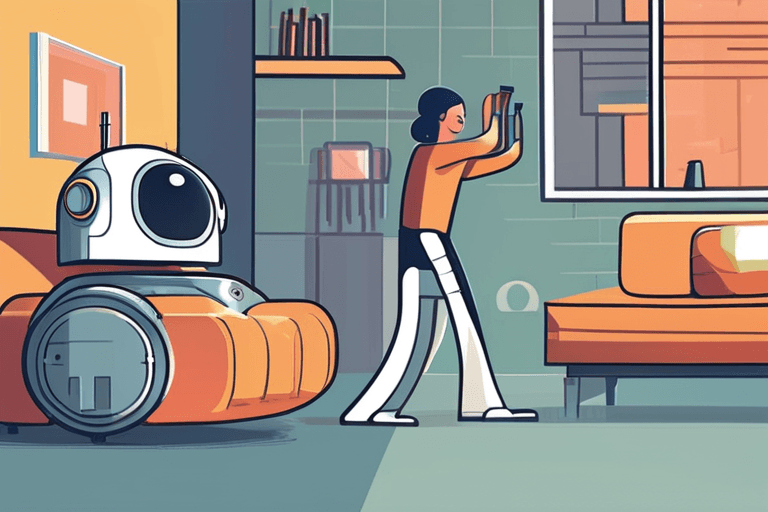
Domestic robots capable of performing multiple household tasks are poised to enter homes this year, fueled by advancements in artificial intelligence. For decades, the concept of a robot butler has been a futuristic dream, but now, companies in Silicon Valley are rapidly developing and training robots to handle chores like folding laundry, loading dishwashers, and cleaning.
The emergence of these multi-purpose domestic bots represents a significant leap in AI and robotics. These robots, such as Eggie, NEO, Isaac, and Memo, are designed to alleviate the burden of mundane household tasks. At Tangible AI, a start-up focused on this technology, Eggie the robot demonstrated its ability to hang up a jacket, strip a bed, and clean up spills. While Eggie is currently controlled by a human, the underlying technology points toward increasing autonomy.
The progress in domestic robots is largely attributed to advancements in AI, particularly in areas like computer vision, natural language processing, and machine learning. Computer vision enables robots to "see" and understand their environment, allowing them to navigate complex spaces and identify objects. Natural language processing allows them to understand and respond to human commands. Machine learning algorithms enable robots to learn from experience and improve their performance over time.
However, the widespread adoption of domestic robots raises several societal implications. One concern is the potential impact on employment, particularly for those employed in domestic service roles. As robots become more capable and affordable, they could displace human workers, leading to job losses and economic disruption.
Another consideration is the ethical implications of entrusting robots with sensitive tasks in the home. Privacy, security, and data protection are paramount concerns. Ensuring that robots are programmed to respect human values and operate in a safe and responsible manner is crucial.
Despite these challenges, the development of domestic robots continues to accelerate. Companies are investing heavily in research and development, and the technology is rapidly improving. While the idea of a fully autonomous robot butler may still be some years away, the arrival of multi-purpose domestic bots this year marks a significant step toward that future. The launch of NEO this year is a key indicator of this progress.












Discussion
Join the conversation
Be the first to comment