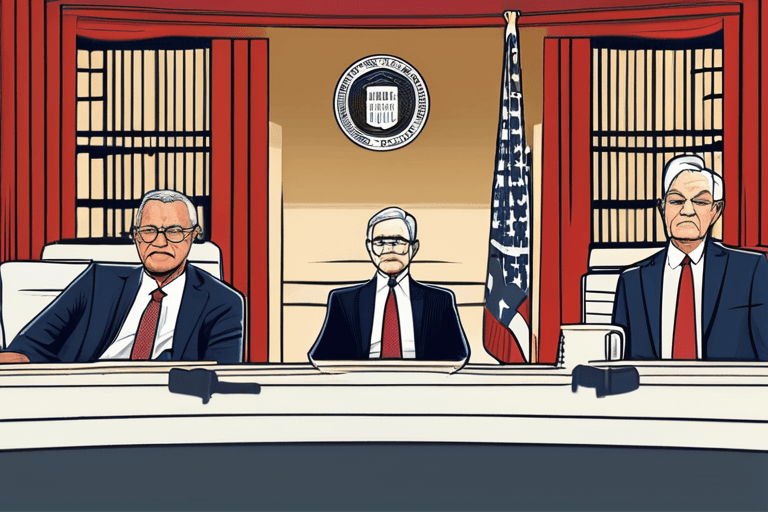
A tremor ran through the world of economics this week as news broke of a criminal investigation into Federal Reserve Chair Jerome Powell. But the aftershocks weren't felt in the markets alone. Three former Fed chairs – Janet Yellen, Ben Bernanke, and Alan Greenspan – alongside ten other prominent former officials, have united in a rare display of solidarity, condemning the probe as a dangerous assault on the Fed's independence.
The investigation, initiated by the Department of Justice (DoJ), arrives after a year of relentless and often personal attacks on Powell by former President Donald Trump, who frequently criticized the Fed's interest rate policies and even resorted to name-calling. This unprecedented situation raises profound questions about the integrity of the US financial system and the separation of monetary policy from political influence.
The core of the issue lies in the delicate balance between political oversight and the operational autonomy of the Federal Reserve. The Fed, as the central bank of the United States, is responsible for managing monetary policy, including setting interest rates and controlling the money supply. These decisions have a direct impact on inflation, employment, and overall economic stability. To ensure these decisions are made in the best interest of the economy, rather than political expediency, the Fed is designed to be independent from direct political interference.
"This is how monetary policy is made in emerging markets with weak institutions, with highly negative consequences for inflation and the functioning of their economies more broadly," the former officials stated in their joint statement. They emphasized that such actions "have no place in the United States whose greatest strength is the rule of law, which is at the foundation of our economic success."
The implications of this investigation extend far beyond the immediate situation. If political pressure can influence the Fed's decision-making process, it could erode public trust in the institution and destabilize the economy. Imagine a scenario where interest rates are manipulated to favor a particular political party or to boost short-term economic gains at the expense of long-term stability. The consequences could be devastating, leading to inflation, economic instability, and a loss of confidence in the US dollar.
The condemnation from former Fed chairs carries significant weight. Janet Yellen, who also served as US Treasury Secretary, brings a wealth of experience in both monetary and fiscal policy. Ben Bernanke guided the US through the 2008 financial crisis, and Alan Greenspan presided over a period of sustained economic growth. Their collective voice underscores the gravity of the situation and the potential damage to the Fed's credibility.
The investigation into Powell also raises concerns about the increasing politicization of institutions that are meant to be independent. This trend is not unique to the United States, as central banks around the world face growing pressure from political leaders to align monetary policy with their agendas. However, the US, with its long tradition of an independent Fed, has been seen as a model for other countries. This investigation threatens to undermine that reputation and set a dangerous precedent.
Looking ahead, it is crucial to safeguard the independence of the Federal Reserve and ensure that monetary policy decisions are based on sound economic principles, not political considerations. The current situation serves as a stark reminder of the importance of maintaining the integrity of our institutions and upholding the rule of law. The future stability of the US economy may depend on it.
















Discussion
Join the conversation
Be the first to comment