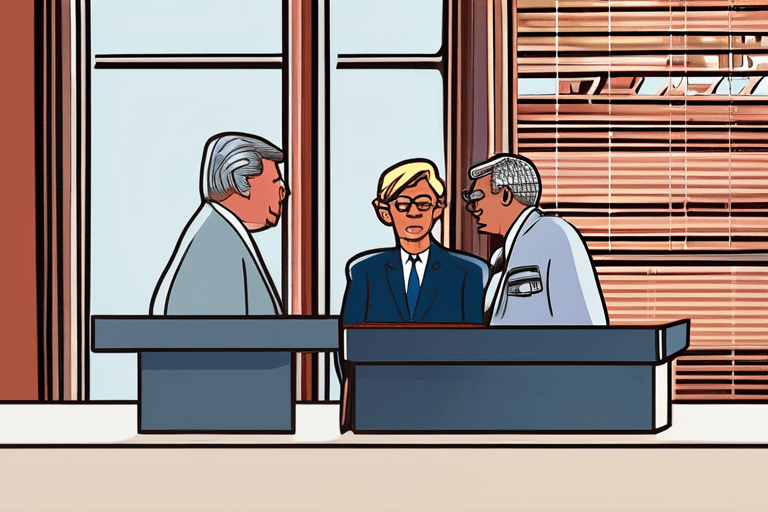
Federal Reserve Chair Jerome Powell recently made an unscheduled video statement on social media amid a long-running dispute with President Trump over interest rate policy. The unusual move came as Trump has repeatedly criticized the Fed's interest rate decisions and attempted to influence the central bank's traditionally independent monetary policy.
The dispute, ostensibly about the cost of a renovation project at the Federal Reserve, escalated as Trump publicly criticized Powell and nominated economists aligned with his views to the Fed's board. According to Reuters Economics Editor Faisal Islam, Trump's aim appears to be to lower U.S. interest rates.
Powell's decision to address the situation via social media is noteworthy, raising questions about the evolving role of central bankers in the age of digital communication and potential deepfakes. The incident highlights the increasing challenges in discerning authentic information from AI-generated misinformation, particularly in high-stakes financial contexts. Deepfakes, AI-generated videos or audio recordings that convincingly mimic a person's likeness and voice, pose a significant threat to trust and credibility in various sectors, including finance and politics.
The use of AI in generating synthetic media is rapidly advancing, making it increasingly difficult to distinguish between real and fake content. Experts warn that deepfakes could be used to manipulate markets, spread disinformation, and undermine confidence in institutions. The implications for society are far-reaching, requiring robust detection methods and media literacy initiatives to mitigate the risks.
The Federal Reserve's independence is crucial for maintaining economic stability and credibility. Political interference in monetary policy can lead to uncertainty and undermine investor confidence. The current situation underscores the importance of safeguarding the independence of central banks and addressing the challenges posed by AI-generated misinformation. The Fed continues to monitor economic conditions and adjust monetary policy as needed, while also working to enhance public understanding of its role and responsibilities.














Discussion
Join the conversation
Be the first to comment