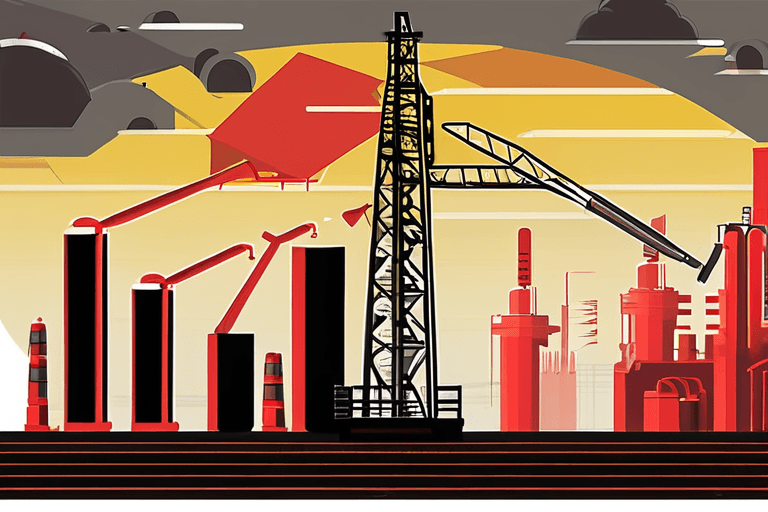
Beneath the shimmering surface of Lake Maracaibo, a dark secret festers. Dilapidated oil tanks stand as grim monuments to Venezuela's vast oil reserves, reserves that, according to industry estimates, hold some of the "filthiest" crude on the planet. Now, a potential US plan to tap into this black gold is raising alarms, not just for the environmental degradation it could inflict on the lake, but for the planet's already strained climate.
The crux of the issue lies in carbon budgets, a concept crucial to understanding our fight against climate change. Think of it as a finite allowance of carbon dioxide we can release into the atmosphere while still holding global warming to a manageable level, ideally 1.5 degrees Celsius above pre-industrial levels. Exceeding this budget means facing increasingly severe consequences: rising sea levels, extreme weather events, and widespread ecological disruption.
An exclusive analysis by ClimatePartner reveals the stark reality: a US-backed exploitation of Venezuela's oil could consume a staggering 13% of the world's remaining carbon budget by 2050. This isn't just a drop in the bucket; it's a significant chunk that could push us closer to irreversible climate catastrophe. The sheer scale of Venezuela's proven oil reserves, the largest in the world on paper, means that their full exploitation would single-handedly exhaust the entire carbon budget for staying within the 1.5C limit.
The implications are profound. Every barrel of Venezuelan crude extracted and burned adds to the atmospheric carbon load, shrinking the remaining carbon budget and accelerating the pace of climate change. This raises a critical ethical question: is the short-term economic gain worth the long-term environmental cost?
"We are at a critical juncture," says Dr. Elena Ramirez, a climate scientist at the Global Climate Institute. "Every decision we make regarding fossil fuel extraction must be viewed through the lens of its impact on the carbon budget. Exploiting Venezuela's oil, given its carbon intensity, is a step in the wrong direction."
The situation highlights the complex interplay between energy security, economic interests, and climate responsibility. While the US may see Venezuelan oil as a way to stabilize energy markets and reduce reliance on other sources, the climate consequences cannot be ignored.
The future demands a shift towards sustainable energy solutions. Investing in renewable energy sources, improving energy efficiency, and developing carbon capture technologies are crucial steps in reducing our reliance on fossil fuels and preserving the remaining carbon budget. The alternative is a future where the dilapidated oil tanks of Lake Maracaibo become symbols of a planet pushed beyond its limits, a stark reminder of the choices we made and the consequences we failed to avert.














Discussion
Join the conversation
Be the first to comment