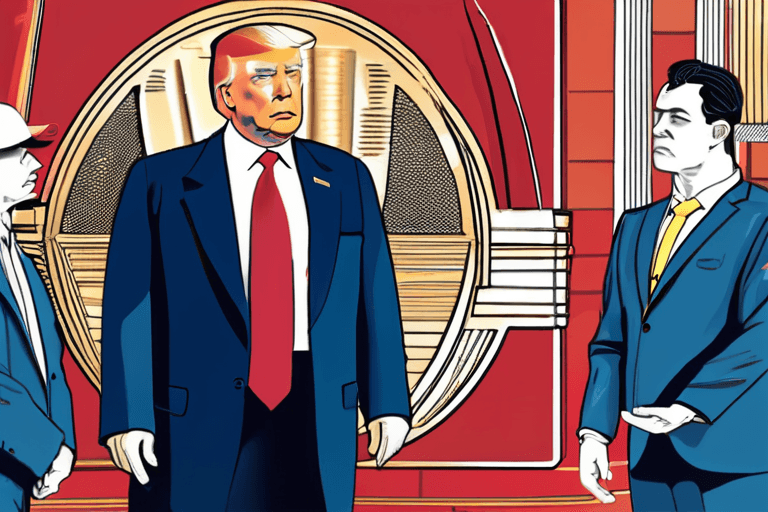
Donald Trump threatened to block ExxonMobil from future investments in Venezuela after the company's CEO, Darren Woods, deemed the country "uninvestable" under its current legal framework. The exchange occurred during a White House meeting last Friday where Trump urged major US oil companies to invest $100 billion to revitalize Venezuela's struggling oil industry following the potential removal of Nicolás Maduro.
Woods' assessment, delivered in front of at least 17 other oil executives, centered on the need for significant legal reforms to make Venezuela an attractive investment destination. This stance contrasts sharply with Trump's vision of a post-Maduro Venezuela ripe for American oil investment.
The potential blocking of ExxonMobil from Venezuelan ventures carries significant market implications. Venezuela, despite its current economic and political turmoil, holds the world's largest proven oil reserves. However, years of mismanagement, corruption, and US sanctions have crippled its oil production. In 2023, Venezuela's oil production averaged around 700,000 barrels per day, a fraction of its peak production of over 3 million barrels per day in the late 1990s. A $100 billion investment, as proposed by Trump, could theoretically boost production significantly, potentially impacting global oil prices and supply dynamics.
ExxonMobil's history in Venezuela is complex. The company, along with other international oil giants like ConocoPhillips and Chevron, had significant operations in the country for decades. However, under Hugo Chávez, Venezuela nationalized much of its oil industry, leading to disputes and arbitration cases. ExxonMobil was awarded approximately $1.6 billion in compensation for the nationalization of its assets. Chevron remains the only major US oil company still operating in Venezuela, albeit under strict US sanctions waivers.
The future of Venezuela's oil industry remains uncertain. While a change in government could potentially unlock foreign investment, significant legal and regulatory reforms would be necessary to attract companies like ExxonMobil. The political risk remains high, and any investment would require careful consideration of sanctions, property rights, and the overall stability of the country. Trump's threat to block ExxonMobil highlights the complex interplay of geopolitics, business interests, and the challenges of investing in politically unstable regions.
















Discussion
Join the conversation
Be the first to comment