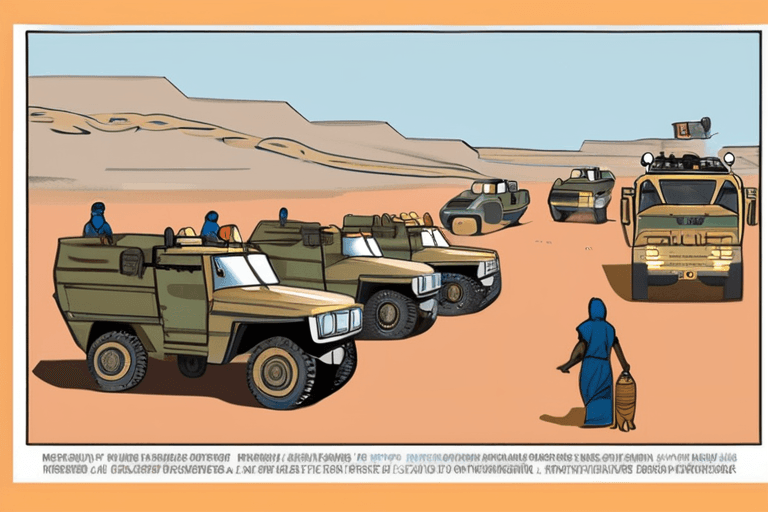
Niger revoked the licenses of numerous transport operators and drivers who refused to deliver fuel to neighboring Mali, where they faced potential attacks from jihadist groups. The action followed a fuel blockade imposed on Mali in September by an al-Qaeda affiliate, which included attacks on petrol tankers along major highways. Mali, a landlocked country, relies heavily on fuel imports and had entered into an agreement with Niger in July to supply 85 million liters of fuel over six months to its northern desert region, an area with a significant presence of militant groups.
The fuel convoys from Niger, traveling a 1,400km (870 miles) route, experienced jihadist attacks even when under military escort, according to AFP. Niger, an oil-producing country and key ally of Mali, both governed by military juntas confronting jihadist violence, took the action to ensure fuel supplies continued. The revoked licenses impacted dozens of transport operators and drivers.
Mali's energy supply faced instability due to the blockade. In November, Niger delivered 82 fuel tankers to Mali, which temporarily stabilized the energy supply disrupted by the blockade affecting convoys from Senegal. The fuel supply agreement between Niger and Mali aimed to alleviate the energy crisis in Mali's vast, northern desert region. The ongoing jihadist blockade highlighted the vulnerability of landlocked nations dependent on fuel imports and the challenges of maintaining supply chains in regions with active militant groups. The revocation of licenses by Niger underscored the pressure on regional allies to support Mali's energy needs amidst security threats.











Discussion
Join the conversation
Be the first to comment