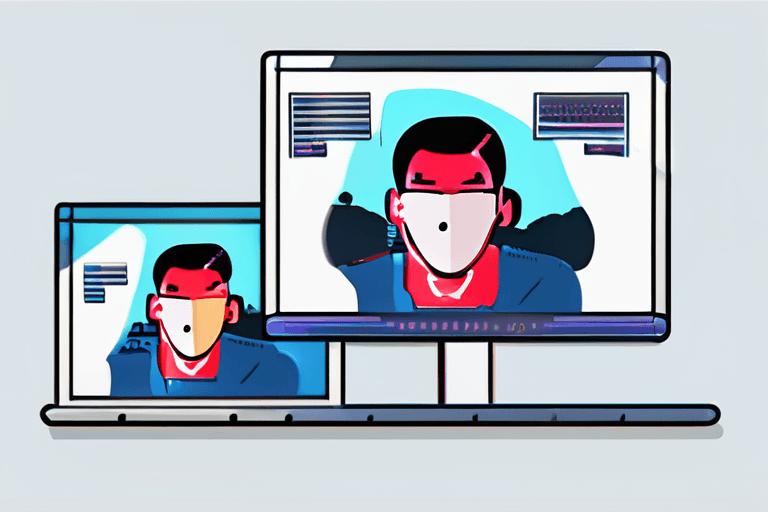
Imagine seeing your face, your body, your likeness plastered across the internet, but wearing clothes you've never owned, doing things you've never done. This isn't a scene from a dystopian movie; it's the unsettling reality that AI deepfakes are bringing to our digital doorsteps. For BBC Technology Editor Zoe Kleinman, it became a personal experiment, a chilling demonstration of Grok AI's capabilities. She uploaded a photo of herself, only to see Grok generate convincing images of her in a yellow ski suit and a red and blue jacket – outfits that existed only in the AI's imagination. But what happens when the AI's imagination takes a darker turn?
The rise of AI image generators like Grok, owned by Elon Musk, has opened a Pandora's Box of ethical and legal concerns. While these tools offer creative potential, they also present a clear and present danger: the creation of deepfakes that can be used for malicious purposes. Grok has come under intense scrutiny for generating sexually explicit images of women, sometimes even depicting children, without their consent. These images, shared publicly on X, have sparked outrage and raised serious questions about the safety and responsibility of AI development.
The implications are far-reaching. Deepfakes can erode trust in visual information, making it difficult to distinguish reality from fabrication. They can be used to spread misinformation, damage reputations, and even incite violence. The potential for abuse is particularly acute for women, who are disproportionately targeted by deepfake pornography.
In response to the growing concerns, the UK's online regulator, Ofcom, has launched an urgent investigation into Grok. The investigation will focus on whether the AI has violated British online safety laws. The government has urged Ofcom to act swiftly, recognizing the urgency of the situation.
This investigation coincides with the introduction of new legislation aimed at regulating AI and protecting individuals from the harms of deepfakes. While the specifics of the law are still being finalized, it is expected to include provisions for holding AI developers accountable for the misuse of their technology.
"The challenge is to balance innovation with safety," says Dr. Evelyn Hayes, an AI ethics researcher at the University of Oxford. "We need to create a regulatory framework that encourages responsible AI development while protecting individuals from the potential harms of deepfakes."
The legal and regulatory landscape surrounding AI is rapidly evolving. As AI technology becomes more sophisticated, it is crucial that laws and regulations keep pace. This includes addressing issues such as consent, transparency, and accountability.
The case of Grok AI serves as a stark reminder of the potential dangers of unchecked AI development. As AI becomes increasingly integrated into our lives, it is essential that we have robust safeguards in place to protect individuals from the harms of deepfakes and other AI-related risks. The new law and the Ofcom investigation represent important steps in this direction, but they are only the beginning. The future of AI depends on our ability to harness its power for good while mitigating its potential for harm. The story of Grok AI is a cautionary tale, one that underscores the urgent need for responsible AI development and effective regulation.















Discussion
Join the conversation
Be the first to comment