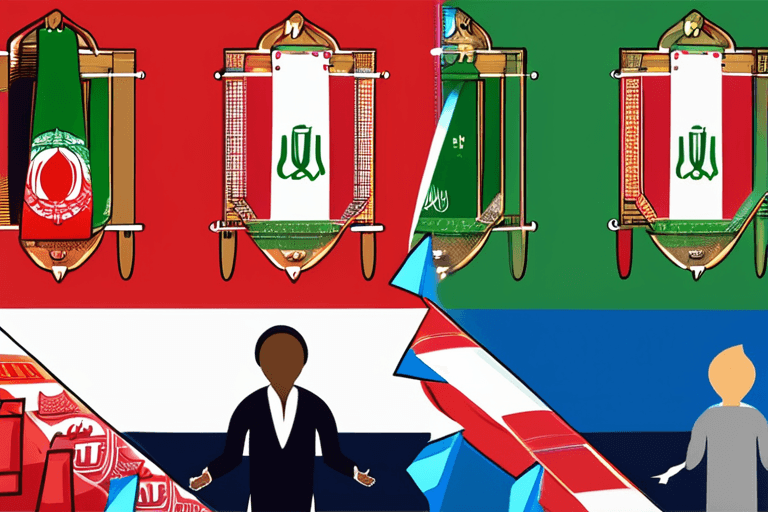
President Trump's recent announcement of a potential 25% tariff on all trade with the United States for countries doing business with Iran has sent ripples through global markets. The abrupt declaration, posted on Truth Social, lacked specific details but signaled a significant shift in US trade policy.
The move directly impacts nations with strong economic ties to Iran, most notably China, which, in the year leading up to October 2025, imported over $14 billion (€10.4 billion) worth of Iranian goods. While the exact composition of these goods remains unspecified in available data, the sheer volume underscores the potential financial repercussions for Chinese businesses.
This tariff threat injects considerable uncertainty into international trade. Companies engaged in commerce with both Iran and the US now face a difficult choice: risk a 25% tariff on exports to the US, a major consumer market, or curtail business activities with Iran. The decision will likely depend on the relative importance of the US market to each company's overall revenue and profitability.
The broader market context reveals a pattern of Trump using tariffs as a tool to exert pressure on countries, as seen in previous trade disputes. This strategy aims to leverage the economic power of the US to achieve specific policy objectives.
Looking ahead, the actual implementation and scope of these tariffs remain unclear. The lack of detailed information from the White House leaves businesses scrambling to assess the potential impact on their supply chains and profitability. The situation demands close monitoring as the global business community awaits further clarification from the US administration.















Discussion
Join the conversation
Be the first to comment