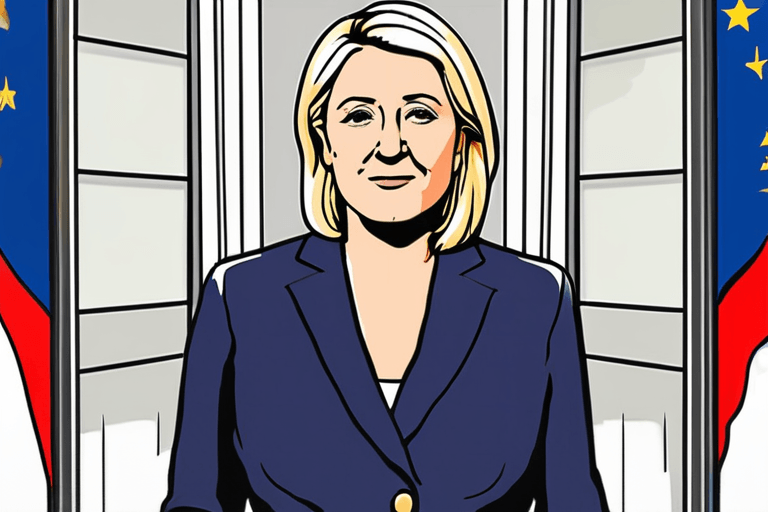
Marine Le Pen, the prominent figure in French far-right politics, initiated her appeal against a five-year ban from public office, a legal battle with significant implications for the French political landscape and future elections. The core issue revolves around Le Pen's conviction last year for embezzling millions of euros in EU funding, a charge that carries substantial financial and political ramifications.
The exact amount of EU funding Le Pen was found guilty of embezzling was not disclosed in the provided source material. However, such a sum, even if relatively small in the context of the overall EU budget, can trigger significant reputational damage and legal penalties. The ban from public office directly impacts Le Pen's ability to participate in the 2027 presidential election, potentially reshaping the political playing field and influencing investor sentiment towards France.
The outcome of the appeal will likely have a ripple effect on the French stock market, particularly for companies sensitive to political shifts. A successful appeal could signal a resurgence of right-wing influence, potentially leading to policy changes that favor certain sectors while impacting others. Conversely, upholding the ban could consolidate the position of centrist or left-leaning parties, leading to different economic priorities and market reactions.
Marine Le Pen has been a consistent force in French politics for years, leading the Rassemblement National (National Rally) party. Her policies often focus on economic nationalism, protectionism, and stricter immigration controls. These stances have resonated with a segment of the French population, but also sparked concerns among international investors who fear potential disruptions to trade and economic stability.
Looking ahead, the appeal's outcome will be closely watched by political analysts, economists, and investors alike. The decision will not only determine Le Pen's political future but also provide insights into the evolving political climate in France and its potential impact on the country's economic trajectory. The implications extend beyond national borders, as the rise or fall of nationalist movements in major European economies can influence broader geopolitical and economic trends.


















Discussion
Join the conversation
Be the first to comment