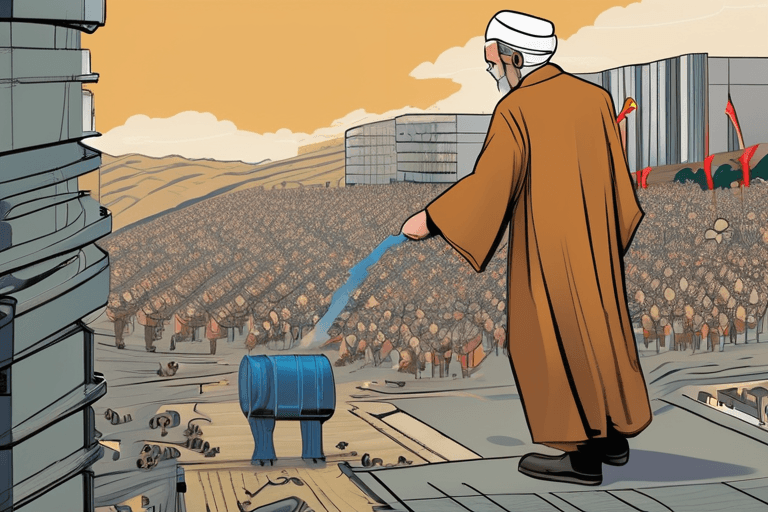
International editor Jeremy Bowen observes that authoritarian regimes tend to collapse in two phases: a gradual decline followed by a sudden fall, but he believes Iran has not yet reached the latter stage. Recent unrest in Iran, while significant, suggests the regime is still in the throes of a gradual decline, according to Bowen.
The latest wave of protests adds to the pressures already facing the Iranian government. These include military setbacks inflicted by the U.S. and Israel over the past two years.
However, the most significant factor for many Iranians is the impact of economic sanctions. In September, the UK, Germany, and France reimposed all UN sanctions that had been lifted under the 2015 nuclear deal, further straining the Iranian economy. Food price inflation exceeded 70% in 2025, and the Iranian currency, the rial, reached a record low in December.
Bowen's analysis draws a parallel to Ernest Hemingway's observation about going broke, "gradually then suddenly," to illustrate the typical trajectory of authoritarian regimes. While the protests and economic hardships represent a major crisis for the government, they do not necessarily indicate an imminent collapse.
Iran has been under international scrutiny for its nuclear program and human rights record for decades. The 2015 nuclear deal, formally known as the Joint Comprehensive Plan of Action (JCPOA), aimed to limit Iran's nuclear activities in exchange for the lifting of sanctions. However, the U.S. withdrew from the JCPOA in 2018 under the Trump administration, reimposing sanctions and leading to a gradual unraveling of the agreement.
The current unrest in Iran is fueled by a combination of economic grievances, political repression, and social discontent. The government's response to the protests, often involving violent crackdowns, has further fueled public anger. Videos circulating on social media, purportedly from Iranian mortuaries, show evidence of the government's violent suppression of dissent.
Despite the immense pressure on the Iranian regime, Bowen argues that it is not on the verge of collapse. The regime has demonstrated resilience in the face of internal and external challenges, and it maintains a strong security apparatus. However, the ongoing economic crisis and the persistent protests pose a significant threat to its stability. The future of Iran's political landscape remains uncertain as the country navigates these turbulent times.









Discussion
Join the conversation
Be the first to comment