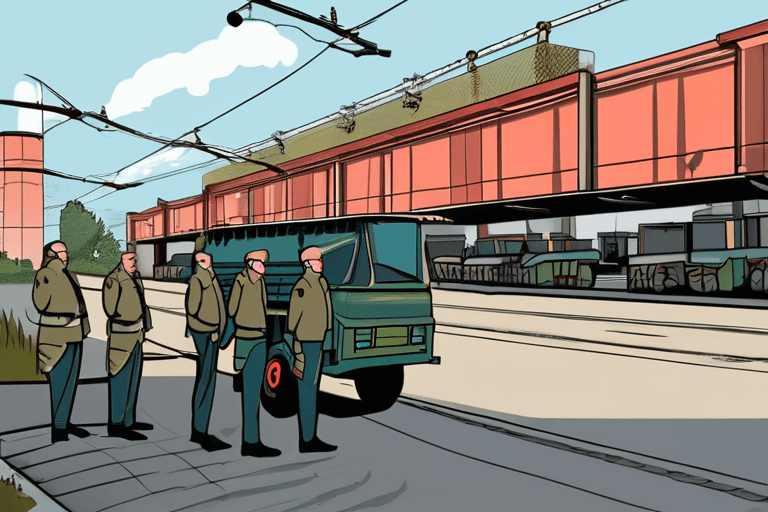
A Russian missile and drone attack on a postal company terminal in Kharkiv, Ukraine, killed four people and wounded six on Tuesday, according to Kharkiv Governor Oleh Syniehubov via Telegram. The attack marks day 1,420 of the Russia-Ukraine war.
Kharkiv Mayor Ihor Terekhov reported that a Russian long-range drone also struck a medical facility for children, causing a fire. The attacks are part of a broader Russian strategy targeting Ukrainian infrastructure.
Ukraine's Deputy Minister of Energy Mykola Kolisnyk stated that continued Russian shelling on Tuesday caused an even greater shortage of electricity in Kyiv, leaving almost 500 high-rise buildings without heat. The ongoing attacks on energy infrastructure highlight the vulnerability of civilian populations during the conflict.
The Ministry of Defence in Moscow, as reported by Russia's TASS news agency, claimed Russian forces launched a massive strike against energy facilities used by the Ukrainian Armed Forces. The ministry also reported that Russian forces shot down 207 Ukrainian drones, though this claim has not been independently verified.
These events underscore the continued reliance on missile and drone technology in modern warfare. The use of AI in these systems allows for increased autonomy and precision, raising ethical questions about accountability and the potential for unintended consequences. AI-powered drones, for example, can be programmed to identify and engage targets with minimal human intervention. This capability raises concerns about the potential for errors and the erosion of human control in lethal decision-making.
The conflict in Ukraine has become a testing ground for various AI applications in military contexts, from reconnaissance and surveillance to autonomous weapons systems. The development and deployment of these technologies have significant implications for the future of warfare and international security. As AI becomes more integrated into military operations, it is crucial to establish clear ethical guidelines and legal frameworks to govern its use. The international community must address the challenges posed by AI in warfare to prevent escalation and ensure that human control remains central to the use of force.


















Discussion
Join the conversation
Be the first to comment