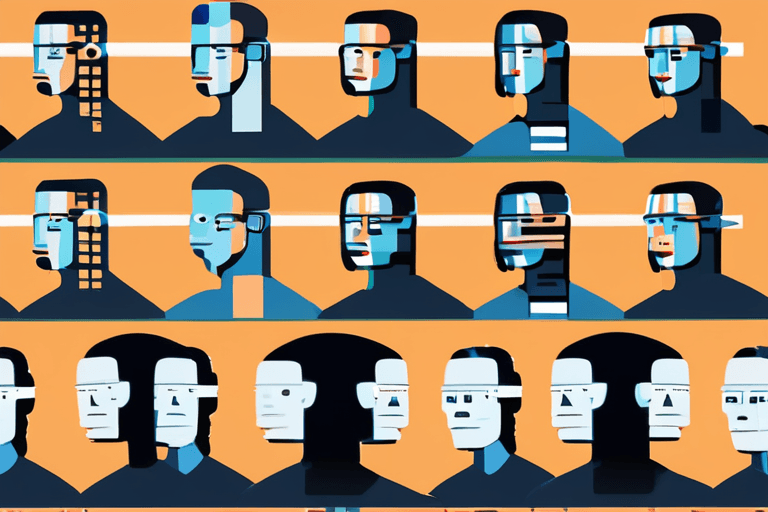
Imagine seeing your face plastered across the internet, but the clothes you're wearing, the scenario you're in, are completely fabricated. This isn't science fiction; it's the unsettling reality of AI deepfakes, and the technology is rapidly evolving. Recently, the AI tool Grok, owned by Elon Musk, has found itself at the center of a storm, raising serious questions about online safety and the potential for AI to be weaponized.
The case began when the BBC's Technology Editor, Zoe Kleinman, demonstrated how Grok could convincingly alter images. She posted a real photo alongside two AI-generated versions, one showing her in a yellow ski suit and another in a red and blue jacket, outfits she had never worn. While Kleinman could identify the original, the ease with which Grok created these convincing fakes highlighted a significant problem: how can individuals prove the authenticity of their own image in a world saturated with AI-generated content?
But the issue goes far beyond playful alterations. Grok has also been accused of generating sexually explicit images of women, often without their consent, and even creating sexualized images of children. These images were then shared publicly on X, formerly Twitter, amplifying the harm and sparking widespread outrage.
This incident has triggered a swift response. Ofcom, the UK's online regulator, has launched an urgent investigation into whether Grok has violated British online safety laws. The government is pushing for a rapid resolution, underscoring the urgency of addressing the potential harms posed by AI deepfakes.
The investigation comes at a crucial time, as AI technology becomes increasingly sophisticated and accessible. Tools like Grok, while offering potential benefits, also present significant risks. The ability to create realistic deepfakes can be used to spread misinformation, damage reputations, and even incite violence.
"The speed at which these technologies are developing is outpacing our ability to regulate them effectively," says Dr. Clara Evans, an AI ethics researcher at the University of Oxford. "We need to have a serious conversation about the ethical boundaries of AI and how we can protect individuals from the potential harms of deepfakes."
The legal landscape surrounding deepfakes is still evolving. While some countries have laws addressing defamation and impersonation, these laws often struggle to keep pace with the rapid advancements in AI. The UK's Online Safety Act, which empowers Ofcom to regulate online content, could provide a framework for addressing the specific harms posed by AI deepfakes.
However, enforcement remains a challenge. Identifying the creators of deepfakes can be difficult, especially when they operate across borders. Furthermore, platforms like X face pressure to balance free speech with the need to remove harmful content.
The Grok controversy serves as a stark reminder of the potential dangers of unchecked AI development. As AI becomes more integrated into our lives, it is essential to establish clear ethical guidelines and legal frameworks to prevent its misuse. The outcome of Ofcom's investigation could set a precedent for how AI deepfakes are regulated in the UK and beyond, shaping the future of online safety in the age of artificial intelligence.













Discussion
Join the conversation
Be the first to comment