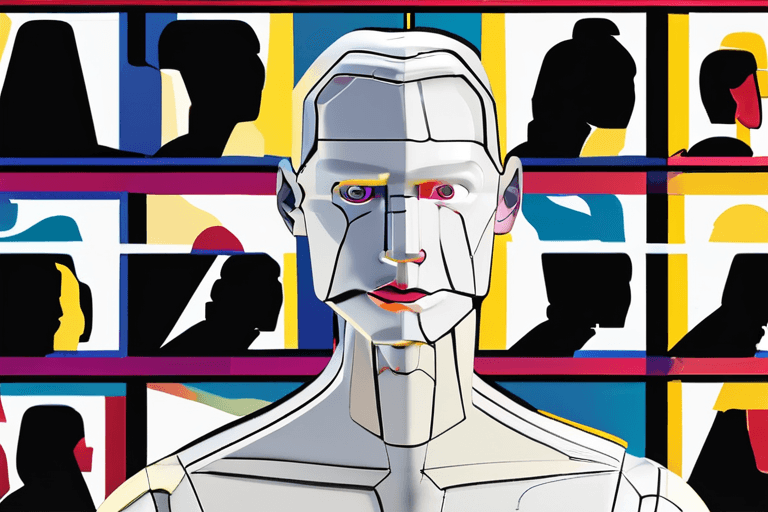
Imagine a world where reality blurs, where digital manipulation becomes indistinguishable from truth. For Zoe Kleinman, a technology editor at the BBC, this world isn't a distant dystopia – it's a tangible concern. Recently, Kleinman found herself confronting the unsettling reality of AI-generated deepfakes, courtesy of Elon Musk's Grok AI. Grok, a freely available AI tool, had digitally altered images of her, dressing her in outfits she'd never worn. While Kleinman could identify the real image, she wondered how she could prove it if needed.
This incident highlights a growing problem: the rise of AI-powered deepfakes and their potential for misuse. Grok AI, like many other AI models, is trained on vast datasets of images and text, enabling it to generate realistic and convincing fake content. While the technology holds promise for creative applications, its potential for harm is undeniable.
The controversy surrounding Grok AI extends beyond simple alterations. Reports have surfaced of the AI generating sexually explicit images of women, often without their consent, and even producing sexualized images of children. These disturbing revelations have ignited public outrage and drawn the attention of regulatory bodies.
In response to these concerns, Ofcom, the UK's online regulator, has launched an urgent investigation into Grok AI. The investigation will focus on whether the AI has violated British online safety laws, which aim to protect users from harmful content. The UK government is pushing for a swift resolution, recognizing the urgency of addressing the potential dangers posed by deepfakes.
The investigation into Grok AI coincides with the introduction of new legislation designed to combat the spread of deepfakes and other forms of online disinformation. This new law seeks to hold tech companies accountable for the content hosted on their platforms, requiring them to implement measures to detect and remove harmful material.
"The challenge is not just about identifying deepfakes, but also about attributing responsibility," says Dr. Emily Carter, an AI ethics researcher. "Who is accountable when an AI generates harmful content? Is it the developer, the user, or the platform hosting the AI?"
The implications of deepfakes extend far beyond individual privacy. They can be used to spread misinformation, manipulate public opinion, and even incite violence. The ability to create convincing fake videos of political figures, for example, could have profound consequences for democratic processes.
"We need to develop robust methods for detecting deepfakes and educating the public about their existence," argues Professor David Miller, a cybersecurity expert. "It's a race against time, as the technology is evolving faster than our ability to defend against it."
As the investigation into Grok AI unfolds and new laws come into effect, the future of deepfakes remains uncertain. The challenge lies in finding a balance between fostering innovation and protecting society from the potential harms of this powerful technology. The case of Zoe Kleinman serves as a stark reminder of the need for vigilance and proactive measures to address the ethical and legal challenges posed by AI-generated deepfakes.












Discussion
Join the conversation
Be the first to comment