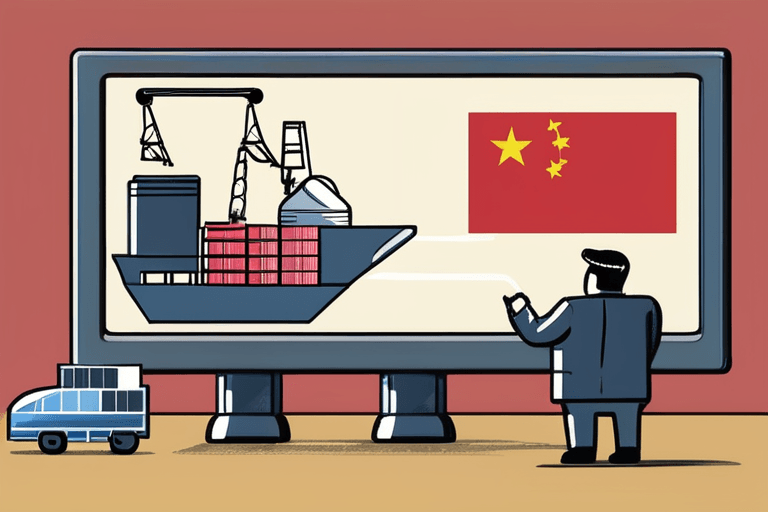
China announced a record trade surplus of $1.19 trillion for 2025, surpassing the previous year's figure of $993 billion. The record surplus, representing the value of goods and services sold overseas compared to imports, occurred during a period marked by global economic uncertainty stemming from trade policies and tariffs implemented by then-U.S. President Donald Trump.
The country's monthly export surpluses exceeded $100 billion on seven occasions throughout the year, indicating a limited impact from U.S. tariffs on China's overall global trade. While trade with the United States experienced a decline, this was offset by increased exports to other regions, particularly Southeast Asia, Africa, and Latin America.
Wang Jun, the deputy director of China's customs, described the figures as "extraordinary and hard-won" during a press conference on Wednesday, citing "profound changes" and challenges in global trade. He highlighted growth in exports related to green technology, artificial intelligence, and robotics. The surplus is largely attributed to robust overseas demand for Chinese goods.
The Trump administration's trade policies, initiated in 2018, aimed to reduce the trade deficit with China and encourage fairer trade practices. These policies included tariffs on billions of dollars worth of Chinese imports, prompting retaliatory measures from Beijing. The impact of these tariffs on the global economy has been a subject of ongoing debate, with some analysts arguing that they disrupted supply chains and increased costs for consumers, while others maintain they were necessary to address unfair trade practices.
The record trade surplus underscores the resilience of the Chinese economy and its ability to adapt to changing global trade dynamics. The long-term implications of this surplus and the ongoing trade relationship between China and the United States remain to be seen, particularly as both nations navigate evolving economic and political landscapes.

















Discussion
Join the conversation
Be the first to comment