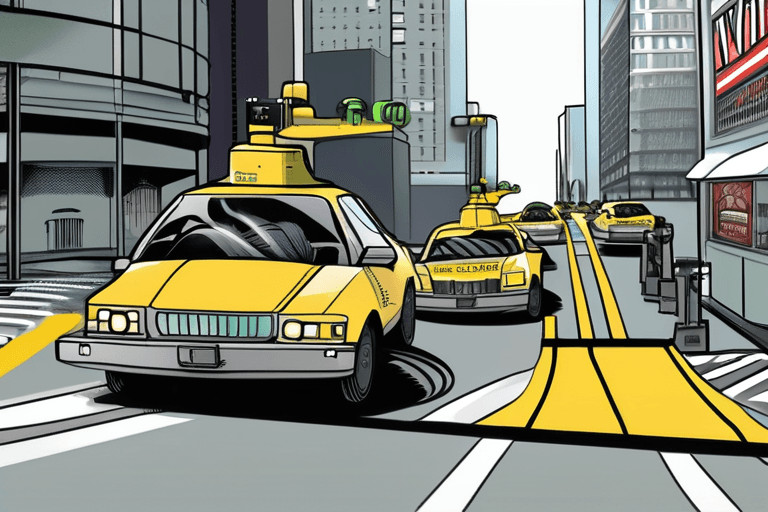
New York Governor Kathy Hochul announced plans Tuesday to introduce legislation that would legalize robotaxis throughout the state, with the notable exception of New York City. The proposed legislation aims to advance the state's autonomous vehicle pilot program, according to Hochul's State of the State address.
Details regarding the specifics of the legislation and its release timeline remain scarce. However, a document outlining Hochul's proposals suggests the expansion of the existing AV pilot program to allow for the limited deployment of commercial, for-hire autonomous passenger vehicles outside of New York City.
Companies seeking to operate commercial robotaxi services will be required to submit applications demonstrating local support for AV deployment and adherence to stringent safety standards, the document stated. The exact definition of "limited deployment" and "highest possible safety standards" remains unclear. The document also lacks specifics on how the state will monitor or evaluate a company's safety record, though it mentions multiple agencies will be involved.
The move signals a significant step toward broader adoption of autonomous vehicle technology in New York, potentially impacting the transportation landscape and economy. The exclusion of New York City, however, highlights the complexities of deploying robotaxis in densely populated urban environments.
The current autonomous vehicle pilot program in New York allows for testing and limited deployment of AVs under specific conditions. Expanding this program could pave the way for companies like Waymo, Cruise, and others to operate commercially in designated areas outside of New York City. These companies have been developing and testing autonomous driving systems for years, utilizing a combination of sensors, software, and high-definition maps to navigate roadways.
The governor's office has not yet provided further details on the proposed legislation, including the specific criteria for evaluating safety records or the process for obtaining local support. The timeline for the legislation's introduction and potential passage also remains uncertain. The involvement of multiple state agencies suggests a comprehensive approach to regulating the emerging robotaxi industry, though the specifics of their roles and responsibilities are yet to be defined.
















Discussion
Join the conversation
Be the first to comment