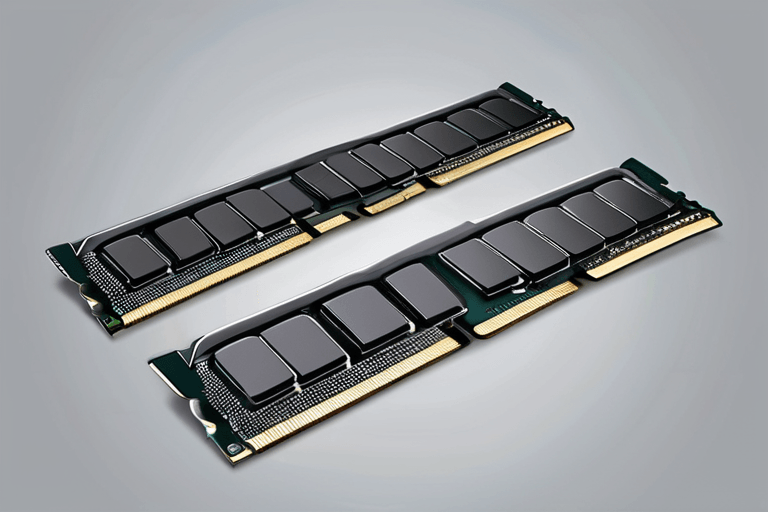
RAM prices have soared due to growing demands from data centers fueled by the artificial intelligence boom, leading to a shortage of RAM and flash memory chips. This increase in memory costs, while detrimental to consumers looking to buy or upgrade computers, may have a positive side effect: a potential slowdown in the marketing push for "AI PCs."
According to a recent announcement from technology research firm Omdia, mainstream PC memory and storage costs rose by 40 to 70 percent in 2025. Ben Yeh, principal analyst at Omdia, stated that these cost increases are being passed on to consumers. This price surge is primarily attributed to the escalating demand for memory in data centers, which are crucial for training and deploying AI models. These models, often based on complex neural networks, require vast amounts of memory for efficient operation.
While global PC shipments saw growth in 2025, with Omdia reporting a 9.2 percent increase compared to 2024 and IDC reporting 9.6 percent growth, analysts anticipate a more unstable market in 2026. Jean Philippe Bouchard, research VP with IDC's worldwide mobile device trackers, noted that the year ahead is shaping up to be extremely volatile. Both Omdia and IDC expect PC manufacturers to actively manage the RAM shortage.
The concept of "AI PCs" refers to personal computers equipped with specialized hardware, such as neural processing units (NPUs), designed to accelerate AI tasks directly on the device. These tasks can include image recognition, natural language processing, and machine learning. The idea is to reduce reliance on cloud-based AI processing, offering benefits such as improved privacy, lower latency, and offline functionality. However, the increased cost of RAM could make it more challenging for manufacturers to produce and market these AI-centric devices at competitive prices.
The implications of widespread AI adoption extend beyond individual devices. As AI becomes more integrated into daily life, concerns around data privacy, algorithmic bias, and job displacement continue to grow. The development and deployment of AI models require significant computational resources, contributing to increased energy consumption and environmental impact. The current RAM shortage highlights the interconnectedness of the technology ecosystem and the potential for unforeseen consequences as AI continues to evolve.
















Discussion
Join the conversation
Be the first to comment