Rufus Gifford, former U.S. ambassador to Denmark under the Obama administration, discussed former President Donald Trump's interest in acquiring Greenland. The conversation occurred during an interview with NPR's A Martínez on Morning Edition, broadcast on January 14, 2026.
Gifford provided insights into the Trump administration's exploration of purchasing the autonomous Danish territory. While the specific details of Trump's motivations remain somewhat opaque, Gifford suggested the interest stemmed from a combination of strategic and economic factors.
The notion of the United States acquiring Greenland is not new. As background, the U.S. has historically recognized Greenland's strategic importance, particularly during World War II and the Cold War. In 1946, the Truman administration offered Denmark $100 million for the island, an offer that was declined. Greenland's geographical location makes it a key point for military operations and scientific research in the Arctic.
The renewed interest under the Trump administration sparked controversy and diplomatic friction between the U.S. and Denmark. Danish officials, including then-Prime Minister Mette Frederiksen, publicly stated that Greenland was not for sale. The incident highlighted the complex relationship between the U.S., Denmark, and Greenland, particularly concerning sovereignty and self-determination.
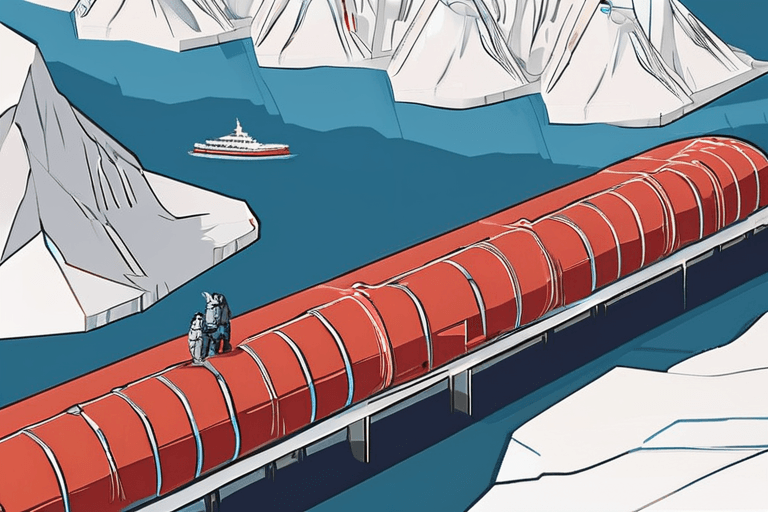
The discussion with Gifford also touched upon the broader geopolitical implications of Greenland's location. As Arctic ice continues to melt due to climate change, access to natural resources and shipping routes in the region is increasing, making Greenland potentially more valuable. This has led to increased interest from various global powers, including Russia and China, further complicating the situation.
Currently, Greenland remains an autonomous territory within the Kingdom of Denmark. While the prospect of a U.S. acquisition appears to be dormant, the underlying strategic and economic interests in Greenland persist, suggesting that the issue may resurface in future geopolitical discussions.

















Discussion
Join the conversation
Be the first to comment