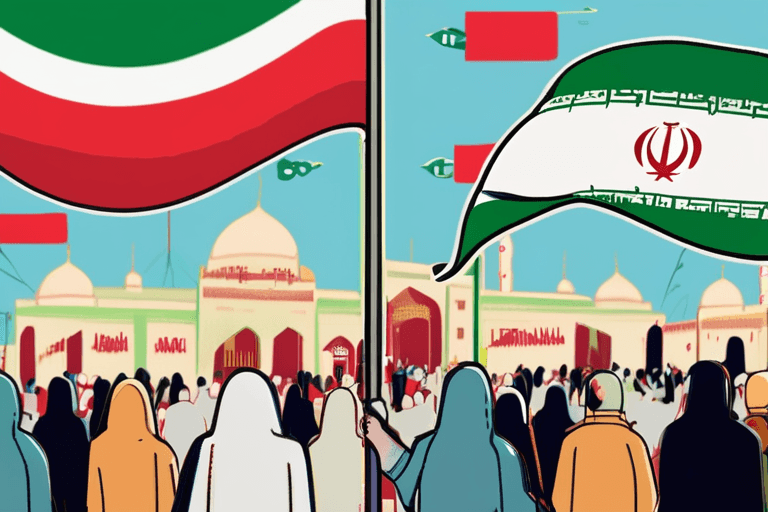
Protests against the Islamic Republic in Iran have intensified, prompting a forceful government crackdown, according to experts and analysts. The widespread demonstrations are viewed by the regime, led by Supreme Leader Ayatollah Ali Khamenei, as a significant threat to its existence, leading to a harsh response aimed at protecting the government and its interests.
Many Iranians believe the government has failed to deliver on its promise of a better life after nearly five decades in power, resulting in large-scale protests demanding an end to the regime. While some hope these protests will lead to the government's overthrow, similar to the 1979 revolution, analysts suggest this outcome is unlikely in the short term. They anticipate the government will suppress the current unrest, but acknowledge the demonstrations highlight deep-seated discontent that will be difficult to eliminate permanently.
"The regime felt an existential angst and brought down the iron fist, so I feel this round is probably done," said Ali Vaez, Iran project director for the International Crisis Group.
The current wave of protests reflects a growing frustration with economic hardship, social restrictions, and political repression in Iran. The government's response, characterized by increased surveillance, arrests, and violence, aims to quell dissent and maintain control. However, this approach risks further alienating the population and fueling future unrest.
The situation in Iran remains volatile, with the potential for further escalation. While the government appears determined to maintain its grip on power, the underlying grievances driving the protests are unlikely to disappear. The long-term stability of the Islamic Republic may depend on its ability to address these concerns and implement meaningful reforms.













Discussion
Join the conversation
Be the first to comment