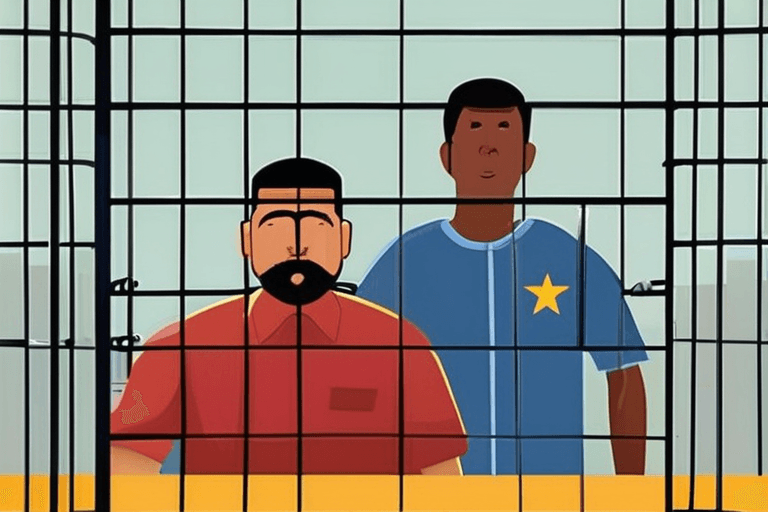
Venezuela's acting president claimed the regime's release of political prisoners signaled a new era for the country, days after the seizure and rendition of Nicolás Maduro. Delcy Rodríguez vowed to continue the releases, asserting the move demonstrated Venezuela's openness to a new political moment that allows understanding amid divergence and ideological political diversity.
Rodríguez, in a speech alongside her brother, who is widely believed to share power with her, accused NGOs of spreading falsehoods about Venezuela by describing the release process as slow and opaque. She stated the NGOs were lying to the world.
Despite the regime's claims, NGOs estimate that nearly 1,000 political prisoners remain in Venezuela. Relatives of those detained were seen waiting in Caracas on Tuesday, hoping for the release of their family members. The releases come amid a complex political transition following years of authoritarian rule under Maduro.
The concept of "political prisoners" is often debated, with varying definitions depending on the political context and the observer. Generally, it refers to individuals imprisoned for their political beliefs or actions, often in opposition to the ruling regime. International human rights organizations closely monitor such cases, advocating for fair trials and releases.
The use of AI in journalism could potentially play a role in monitoring and reporting on such situations. AI algorithms can analyze large datasets of news reports, social media posts, and government statements to identify patterns and trends related to political imprisonment. Natural Language Processing (NLP), a subfield of AI, can be used to assess the sentiment and bias in these sources, providing a more objective view of the situation. Machine learning models can also be trained to predict potential human rights violations based on historical data.
However, the application of AI in this context also raises ethical considerations. The data used to train AI models can be biased, leading to inaccurate or unfair assessments. It is crucial to ensure that AI systems are transparent, accountable, and used in a way that respects human rights.
The ongoing release of political prisoners in Venezuela, if sustained, could represent a significant step towards political reconciliation and a more democratic society. However, the international community remains cautious, emphasizing the need for free and fair elections, respect for human rights, and an end to political persecution. The situation is evolving, and further developments are expected in the coming weeks as the new leadership attempts to consolidate power and address the country's deep political and economic challenges.
















Discussion
Join the conversation
Be the first to comment