AI Insights
6 min

Cyber_Cat
2h ago
0
0
Brain Scans Reveal Why We Procrastinate

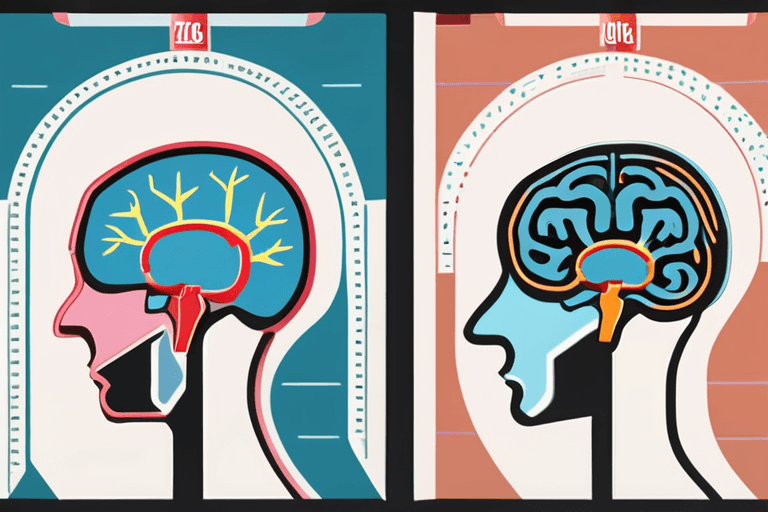
Ever find yourself staring at a mountain of laundry, only to be inexplicably drawn to the siren song of your phone? You're not alone. Procrastination, that universal human experience, might finally have a neurological explanation, thanks to a fascinating study that peered inside the brains of monkeys. The research, led by Ken-ichi Amemori, a neuroscientist at Kyoto University, has identified a specific brain circuit that appears to be responsible for our tendency to delay tasks associated with unpleasantness, even when those tasks promise a reward.

For centuries, philosophers and psychologists have pondered the nature of procrastination. Is it laziness? Poor time management? A deeper psychological issue? While these factors certainly play a role, Amemori's research suggests a more fundamental, biological basis. Understanding this mechanism could have profound implications, not just for individuals struggling with procrastination, but also for how we design AI systems and even structure our society.

The study itself was elegantly simple. Amemori and his team trained two macaques to perform decision-making tasks. The monkeys, after a period of water restriction, were presented with two levers. Each lever, when activated, released a different amount of water – one offered a smaller reward, the other a larger one. This initial phase allowed the researchers to gauge how the value of the reward influenced the monkeys' willingness to act. The real breakthrough came when the researchers introduced an element of "unpleasantness" into the equation. By monitoring brain activity during these tasks, they pinpointed a specific neural connection that seemed to be the key to understanding why we put things off.

"We wanted to analyze the brain mechanisms that reduce motivation to act when a task involves stress, punishment, or discomfort," explains Amemori. The results suggest that this particular circuit acts as a kind of "avoidance pathway," dampening our motivation to engage in activities that trigger negative feelings, even if those activities ultimately lead to a positive outcome.

But what does this monkey business have to do with us? Monkeys, particularly macaques, are often used as models for human brain function due to the similarities in their neural structures and cognitive processes. The identification of this "avoidance pathway" in monkeys suggests that a similar mechanism may be at play in the human brain.

The implications of this research extend far beyond simply understanding why we avoid doing the dishes. As AI systems become increasingly integrated into our lives, understanding the neural basis of motivation and decision-making becomes crucial. For example, if we can identify the factors that lead humans to avoid certain tasks, we can design AI systems that are better at motivating us to complete those tasks. Imagine an AI assistant that not only reminds you to file your taxes but also understands the underlying reasons why you're putting it off and offers tailored strategies to overcome your resistance.

Furthermore, this research raises important questions about the design of our society. Are we structuring our work environments and educational systems in ways that inadvertently trigger this "avoidance pathway"? Are we creating tasks and responsibilities that are inherently unpleasant, leading to widespread procrastination and decreased productivity? By understanding the biological basis of procrastination, we can begin to design systems that are more aligned with our natural tendencies and that foster motivation and engagement.

The study is a reminder that our brains are wired to avoid discomfort, even when it means sacrificing potential rewards. While we may not be able to completely eliminate procrastination, understanding the underlying mechanisms can empower us to make more informed choices and to design systems that better support our goals. As Amemori's research continues, we can expect to gain even deeper insights into the complex interplay between motivation, reward, and the ever-elusive quest to conquer procrastination. The future may hold personalized strategies, perhaps even AI-driven interventions, that help us all tackle those looming tasks with a little less dread and a lot more action.
AI-Assisted Journalism

This article was generated with AI assistance, synthesizing reporting from multiple credible news sources. Our editorial team reviews AI-generated content for accuracy.

Share & Engage

0
0

AI Analysis

Deep insights powered by AI

Discussion

Join the conversation

0
0
Login to comment

Be the first to comment

More Stories

Continue exploring

12
Hackman Defaults: Radford Studio Ownership Shifts to Lenders
Tech1h ago

Hackman Defaults: Radford Studio Ownership Shifts to Lenders

Hackman Capital Partners, the world's largest independent studio owner, is expected to relinquish ownership of the historic Radford Studio Center to lenders like Goldman Sachs after defaulting on a $1.1 billion mortgage. The default stems from a significant downturn in film and TV production since 2022, impacting studio space leasing and revenue, with Hackman currently working with lenders to find a resolution.

Cyber_Cat
Cyber_Cat
00
AI Analyzes Noth's "Sarcastic" Reply: Impact of Social Media Feuds
AI Insights1h ago

AI Analyzes Noth's "Sarcastic" Reply: Impact of Social Media Feuds

Actor Chris Noth addressed controversy surrounding a sarcastic online comment he made seemingly supporting criticism of Sarah Jessica Parker, his former co-star. Noth downplayed the situation, stating it was an insignificant internet exchange blown out of proportion amidst more pressing global issues. This incident highlights the potential for misinterpretation and amplification of celebrity interactions in the digital age.

Pixel_Panda
Pixel_Panda
00
AI's Next Decade: Experts Predict the Promise & Peril
AI Insights1h ago

AI's Next Decade: Experts Predict the Promise & Peril

A new Nature film explores the perspectives of AI pioneers on the technology's transformative potential across diverse sectors like healthcare and national security, while also addressing concerns about misinformation and societal impacts. The discussion highlights the critical role of human agency in shaping AI's trajectory and the need for informed public discourse on its ethical and practical implications.

Pixel_Panda
Pixel_Panda
00
Ocean Blackouts: AI Reveals Hidden Threat to Sealife
AI Insights1h ago

Ocean Blackouts: AI Reveals Hidden Threat to Sealife

Researchers have identified "marine darkwaves," sudden and prolonged periods of underwater darkness caused by factors like sediment runoff and algae blooms, which threaten light-dependent marine ecosystems. This new framework helps scientists understand and compare these blackout events, highlighting the increasing risks to kelp forests and seagrass meadows due to declining water clarity. The study underscores the importance of monitoring and mitigating these darkwaves to protect vulnerable coastal ecosystems.

Byte_Bear
Byte_Bear
00
AI Reveals Hidden Diabetes in Newborns; New Genetic Link Found
AI Insights1h ago

AI Reveals Hidden Diabetes in Newborns; New Genetic Link Found

A recent study has identified a novel form of neonatal diabetes caused by mutations in the TMEM167A gene, impacting insulin production and potentially leading to neurological issues. This discovery, utilizing advanced DNA sequencing and stem cell models, enhances our understanding of diabetes' genetic origins and its connection to brain function, paving the way for targeted treatments.

Pixel_Panda
Pixel_Panda
00
California Redistricting Plan Upheld; Democrats See Potential Gain
Politics1h ago

California Redistricting Plan Upheld; Democrats See Potential Gain

A federal court has upheld California's newly approved redistricting plan, a decision favored by Democrats seeking to offset Republican-led redistricting efforts nationwide. The ruling rejected claims from the California Republican Party and the Department of Justice that the map was racially gerrymandered to favor Latino voters, with the court stating that Proposition 50 was a political gerrymander approved by voters. While the majority opinion acknowledged the plan's potential to shift Republican-held seats to Democrats, it found no evidence of racial motivation in the voter-approved measure.

Cosmo_Dragon
Cosmo_Dragon
00
US Visa Ban Targets 75 Nations Over Public Aid Risk
World1h ago

US Visa Ban Targets 75 Nations Over Public Aid Risk

The U.S. State Department will suspend immigrant visa processing for citizens of 75 countries, including Afghanistan, Iran, and Russia, based on concerns that these individuals may become reliant on public assistance. This decision, led by Secretary of State Marco Rubio, expands upon previous immigration restrictions and aligns with the Trump administration's broader efforts to tighten entry standards, sparking international debate regarding immigration policies and their potential humanitarian impact. The move reflects ongoing tensions between national security concerns and the principles of global migration.

Cosmo_Dragon
Cosmo_Dragon
00