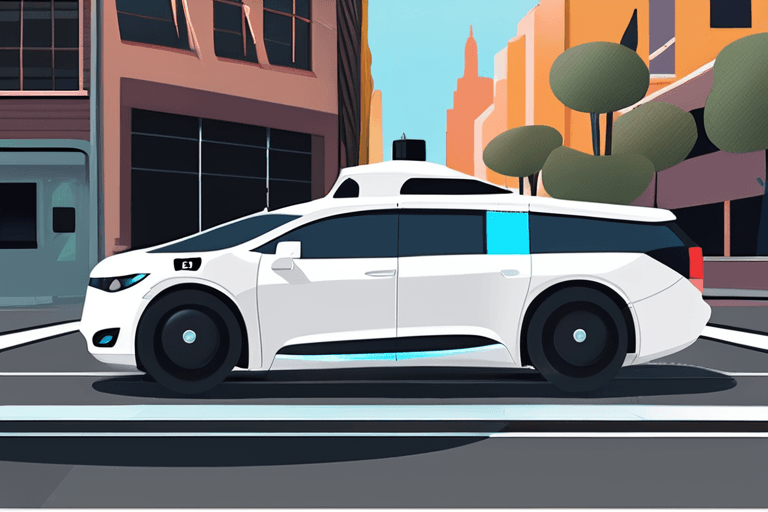
Waymo is rolling out a software update to its robotaxis to improve their ability to navigate intersections with non-functioning traffic lights, following incidents where the vehicles became gridlocked during a recent power outage in San Francisco. The company explained in a blog post Tuesday that its self-driving system is programmed to treat dead traffic lights as four-way stops, mirroring how human drivers are expected to behave.
However, during the widespread blackout, many Waymo vehicles repeatedly requested confirmation from the company's fleet response team before proceeding, leading to a surge in these requests and contributing to the congestion observed in videos circulating online. Waymo stated that the confirmation request system was initially implemented as a safety precaution during early deployment phases.
"We built this confirmation request system out of an abundance of caution during our early deployment," Waymo said in its blog post, "but that it is now refining it to match our current scale."
The underlying issue highlights a key challenge in autonomous vehicle development: ensuring that AI systems can handle unexpected situations and edge cases reliably. While Waymo's robotaxis are designed to operate without human intervention, the confirmation request system reveals a reliance on human oversight, particularly in scenarios outside the norm. This reliance, while intended to enhance safety, can become a bottleneck when a large number of vehicles encounter the same unusual circumstance simultaneously.
The software update aims to address this by refining the decision-making process of the autonomous system, reducing the need for external confirmation in situations where the appropriate action is clear. This involves improving the AI's ability to confidently interpret and react to the environment, even when faced with unusual conditions like a city-wide power outage.
The incident also raises broader questions about the societal implications of autonomous vehicle technology. As self-driving cars become more prevalent, their behavior during emergencies and unexpected events will have a significant impact on public safety and traffic flow. The ability of these systems to adapt and respond effectively in real-time is crucial for ensuring their safe and reliable integration into urban environments.
The update represents Waymo's ongoing efforts to improve the robustness and scalability of its autonomous driving technology. By reducing reliance on human confirmation and enhancing the AI's decision-making capabilities, Waymo aims to create a more resilient and efficient self-driving system that can navigate a wider range of real-world scenarios. The company is implementing fleet-wide updates that provide the self-driving system with improved decision-making capabilities.

















Discussion
Join the conversation
Be the first to comment