Politics4m ago
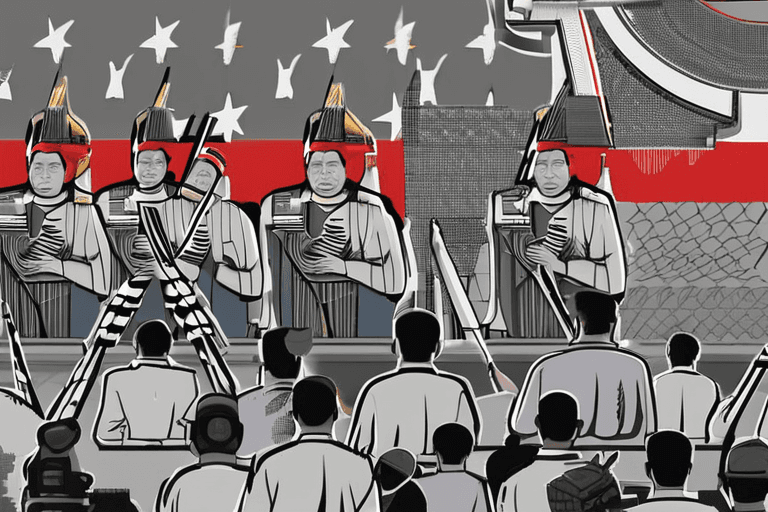
開発中:ミャンマー軍事政権、非難の声の中「偽装」選挙を強行
ミャンマーの軍事政権は、広範な批判と内戦の中、段階的な選挙を実施しており、主要政党は解散させられ、指導者たちは投獄されています。この選挙は、軍事政権の権力を正当化するための試みと見なす者もいる一方、反対勢力は厳しい処罰に直面し、複数の地域で暴力が報告されています。

00

Chief Information Officers (CIOs) must actively participate in artificial intelligence experimentation rather than simply overseeing its governance, according to Rani Johnson, Workday CIO, in a recent statement. The current rapid advancement of AI technology presents both opportunities and challenges for enterprise technology leaders, demanding a more proactive approach.
Johnson argues that waiting for a fully formed AI strategy carries a greater risk than potential missteps during experimentation. She emphasizes the importance of access, trust, and hands-on learning as the foundation for achieving real impact with AI. "Real impact with AI doesn't start with flawless, grand designs," Johnson stated. "It begins with access, trust and a commitment to hands-on learning."
Johnson's perspective stems from her extensive experience navigating technological innovation. She recounted her early experiments with expert systems, including a venture aimed at helping people choose outfits, which faced skepticism from investors who doubted the viability of online clothing retail. This experience, among others, taught her that new technologies often encounter resistance that is later proven short-sighted.
The implications of AI extend beyond individual companies, impacting society as a whole. Clear explanations of AI concepts are crucial for fostering understanding and trust. AI, at its core, involves algorithms that enable computers to perform tasks that typically require human intelligence, such as learning, problem-solving, and decision-making. Recent developments in AI include advancements in natural language processing, computer vision, and machine learning, leading to applications in various sectors, including healthcare, finance, and transportation.
The need for CIOs to lead AI experimentation arises from the potential for AI to transform business operations and create new opportunities. By actively engaging in experimentation, CIOs can gain firsthand knowledge of AI's capabilities and limitations, enabling them to make informed decisions about its implementation. This hands-on approach also allows CIOs to identify potential risks and develop strategies to mitigate them.
However, governing AI remains a critical responsibility for CIOs. This includes establishing ethical guidelines, ensuring data privacy and security, and complying with relevant regulations. Balancing experimentation with governance is essential for realizing the benefits of AI while minimizing potential risks.
The current status of AI adoption varies across industries and organizations. Some companies have already integrated AI into their core operations, while others are still in the early stages of experimentation. The next developments in AI are likely to focus on improving its accuracy, efficiency, and explainability. Researchers are also working on developing AI systems that are more robust, resilient, and aligned with human values.
Multi-Source Journalism
This article synthesizes reporting from multiple credible news sources to provide comprehensive, balanced coverage.
Deep insights powered by AI
Discover more articles
ミャンマーの軍事政権は、広範な批判と内戦の中、段階的な選挙を実施しており、主要政党は解散させられ、指導者たちは投獄されています。この選挙は、軍事政権の権力を正当化するための試みと見なす者もいる一方、反対勢力は厳しい処罰に直面し、複数の地域で暴力が報告されています。

障害者の権利擁護者であるボブ・カフカ氏(ベトナム戦争退役軍人、ADAPTの主要な組織者)が79歳で死去し、政策変更と障害者への個別支援のために戦った功績を残しました。カフカ氏の活動は、立法擁護と直接支援の両方に焦点を当て、障害を持つ人々の生活と尊厳の向上を目指していました。彼の逝去は、障害者権利運動の将来について、擁護者たちの間で懸念を高めています。


末日聖徒イエス・キリスト教会の重要な指導者であり、総裁の後継者と目されていたジェフリー・R・ホランド氏が、腎臓病の合併症により85歳で逝去されました。同氏の死去は、教会の指導者継承に不確実性をもたらし、他の幹部が総裁に就任する時期を早める可能性があり、教会の指導部における高齢化という構造を浮き彫りにしています。

障害者の権利擁護者であるボブ・カフカ氏(ベトナム戦争退役軍人、ADAPTの主要な組織者)が79歳で死去しました。政策変更を提唱し、障害を持つ人々を支援する活動で知られるカフカ氏は、障害者コミュニティの尊厳と自立を促進するために生涯を捧げました。ADAPTの共同創設者であるマーク・ジョンソン氏によると、彼の活動には、個人への直接的な支援、資金調達、政府当局者との交渉などが含まれていました。

末日聖徒イエス・キリスト教会の重要な指導者であり、次期大管長候補であったジェフリー・R・ホランドが、腎臓病の合併症により85歳で死去しました。彼の死は、教会の確立された継承計画に不確実性をもたらし、将来の指導体制や政策決定に影響を与える可能性があります。

ロシアのウクライナ侵攻が4年目に近づくにつれ、エネルギー価格の低迷、欧米による制裁強化、政府系ファンドの縮小などにより、ロシアの金融システムへの負担が増大している。ロシア当局者は、不払いによる潜在的な銀行危機を警告しており、進行中の紛争とその世界的な影響に関連する経済的リスクを強調している。
Discussion
0 comments
Share Your Thoughts
Your voice matters in this discussion
Login to join the conversation
No comments yet
Be the first to share your thoughts!