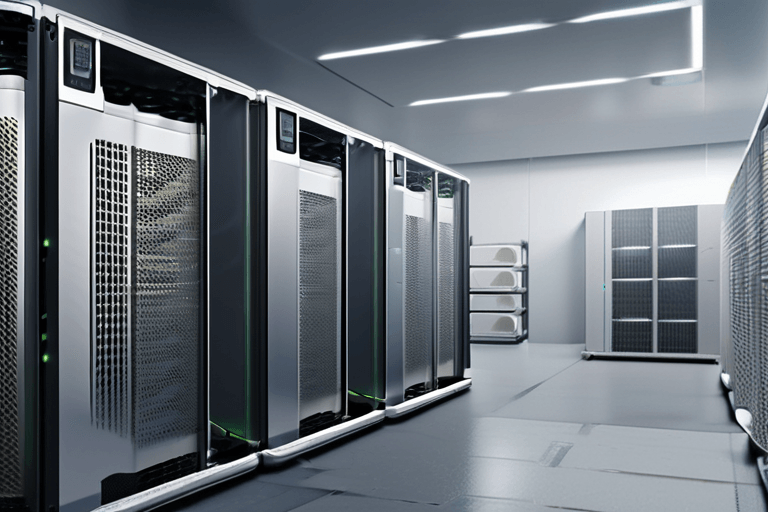
Data centres have been employing innovative cooling methods to prevent overheating in their high-performance computing equipment. One such approach involves using showers and baths to keep the technology cool, a technique that has gained attention in the industry.
According to a report by Chris Baraniuk, data centres have been using showers and baths to cool their servers, which are the heart of their operations. This method, known as "immersion cooling," involves submerging the servers in a bath of liquid coolant, which absorbs the heat generated by the components. The liquid is then recirculated and cooled, allowing the servers to operate at optimal temperatures.
Industry experts say that immersion cooling can be more efficient and cost-effective than traditional air-cooling methods. "It's a game-changer for data centres," said Dr. Thomas Fanning, a researcher at the University of California. "By using immersion cooling, we can reduce the energy consumption of our data centres by up to 90%." Fanning added that immersion cooling also allows for higher densities of computing equipment, making it an attractive option for companies looking to expand their data centre capacity.
The use of showers and baths to cool data centre equipment is not a new concept, but it has gained popularity in recent years as companies seek to reduce their energy consumption and environmental impact. In 2019, a company called CoolIT Systems introduced a product called the "Liquid Ultra High Density" (LUHD) system, which uses immersion cooling to cool high-performance computing equipment. The LUHD system has been adopted by several major data centre operators, including Google and Microsoft.
In addition to immersion cooling, data centres are also exploring other innovative cooling methods, such as using phase-change materials and advanced air-cooling systems. These technologies are designed to improve the efficiency and effectiveness of data centre cooling systems, reducing the need for energy-intensive air conditioning systems.
As the demand for data centre capacity continues to grow, companies are looking for ways to reduce their energy consumption and environmental impact. Immersion cooling is one solution that is gaining traction in the industry, and it is likely to play a major role in the development of future data centre infrastructure.
















Discussion
Join the conversation
Be the first to comment