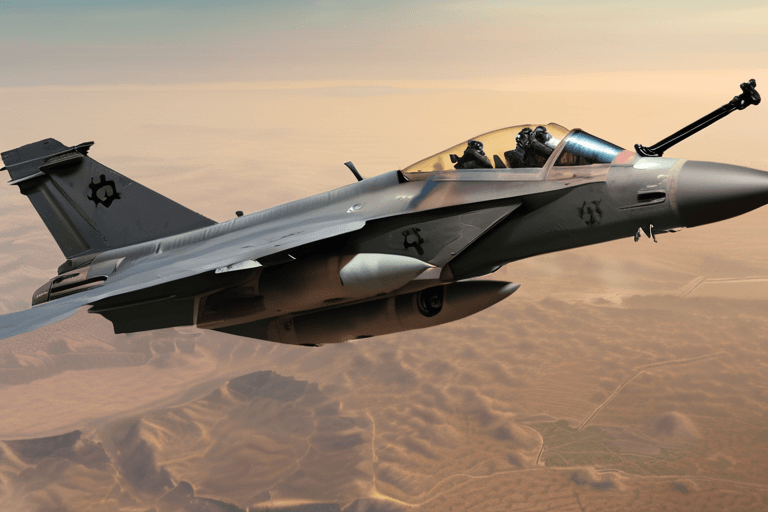
Trump told Politico that he ordered the strikes as "a Christmas present," a statement that contradicts claims made by Nigerian officials. Casualty numbers remain unclear, but both U.S. and Nigerian officials confirmed that militants were killed in the operation.
Nigerian Foreign Minister Yusuf Maitama Tuggar described the operation to the BBC as a "joint operation" planned "for quite some time" using intelligence provided by Nigeria. He emphasized that the strikes had "nothing to do with a particular religion" and did not rule out the possibility of future operations. Tuggar disputed Trump's assertion about the timing of the strikes, stating they did not have "anything to do with Christmas." Trump, however, told Politico that the airstrikes were initially planned for an earlier date.
The U.S. military's engagement in Nigeria against IS highlights the evolving landscape of counterterrorism efforts and the role of artificial intelligence (AI) in modern warfare. AI algorithms are increasingly used in intelligence gathering, target identification, and risk assessment, enhancing the precision and efficiency of military operations. These algorithms analyze vast datasets from various sources, including satellite imagery, social media, and signals intelligence, to identify potential threats and predict enemy movements.
The use of AI in military operations raises ethical and societal implications. One concern is the potential for algorithmic bias, where AI systems perpetuate or amplify existing prejudices, leading to unintended consequences and civilian casualties. Another concern is the lack of transparency and accountability in AI-driven decision-making processes. It is crucial to establish clear guidelines and oversight mechanisms to ensure that AI is used responsibly and ethically in warfare.
The strikes in Nigeria also underscore the growing threat posed by IS affiliates in Africa. The group has expanded its presence in several countries, exploiting political instability, economic hardship, and social grievances to recruit new members and launch attacks. Countering this threat requires a multifaceted approach that combines military action with efforts to address the underlying causes of extremism, such as poverty, inequality, and lack of opportunity.
The situation remains fluid, and further developments are expected as the U.S. and Nigerian governments continue to assess the impact of the strikes and coordinate future actions. The U.S. military is likely to maintain a presence in the region to monitor the activities of IS and provide support to local forces. The Nigerian government is expected to intensify its efforts to combat extremism and promote stability in the affected areas.


















Discussion
Join the conversation
Be the first to comment