A Saudi-led coalition in Yemen stated Saturday it would intervene to defend the internationally recognized government if separatists did not peacefully withdraw from recently seized territories. Maj. Gen. Turki al-Malki, a senior Saudi military official and spokesman for the coalition supporting the Yemeni government, called for de-escalation and the return of territory, adding that any military actions against these efforts would be met with immediate and direct action, according to Saudi state media.
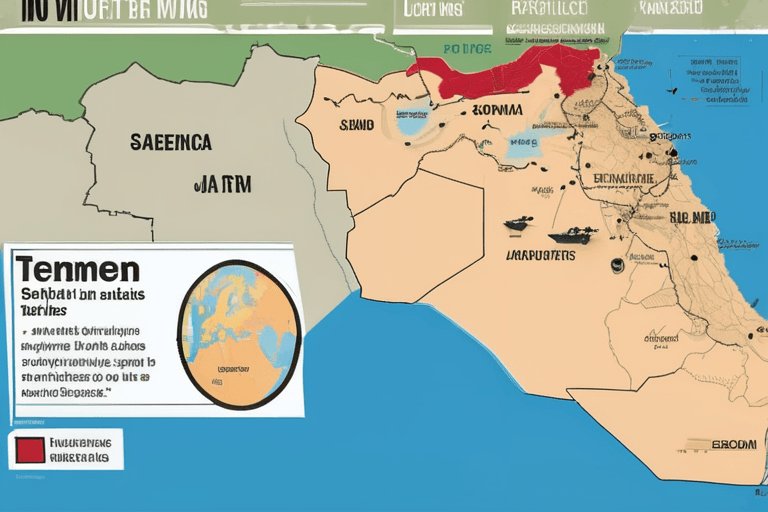
The separatist group, the Southern Transitional Council (STC), had used military force earlier this month to seize parts of the oil-rich Hadramaut province in southern Yemen and al-Mahra province in the east. These actions further complicated the already multifaceted conflict in Yemen, a nation strategically located on the Arabian Peninsula bordering Saudi Arabia and Oman, and overlooking key maritime routes like the Bab-el-Mandeb Strait.
The STC, established in 2017, has received financial and military backing from the United Arab Emirates (UAE), a Saudi ally within the coalition. This support highlights the complex dynamics within the anti-Houthi alliance, where differing agendas and regional power plays often intersect. The UAE's support for the STC stems from a shared opposition to Islamist groups and a desire to secure its interests in southern Yemen, a region with a history of separatist movements.
On Friday, Amr al-Bidh, a senior STC official, reported that two Saudi airstrikes targeted STC-affiliated forces in Hadramaut. Al-Bidh reported no casualties. Saudi Arabia did not publicly acknowledge conducting any strikes or respond to the allegation.
Yemen has been embroiled in a civil war since 2014, when the Houthi movement, a Zaidi Shia Muslim group, seized control of the capital, Sanaa, and much of northern Yemen. The conflict escalated in 2015 when the Saudi-led coalition intervened in support of the internationally recognized government of President Abdrabbuh Mansur Hadi. The war has created one of the world's worst humanitarian crises, with millions facing starvation and disease. International organizations, including the United Nations, have repeatedly called for a ceasefire and a negotiated settlement to the conflict. The involvement of regional powers like Saudi Arabia and the UAE has further fueled the conflict, turning it into a proxy war with devastating consequences for the Yemeni people. The current Saudi statement underscores the fragility of the situation and the potential for further escalation if the STC does not comply with the demand to withdraw. The international community is closely watching the developments, fearing that renewed fighting could undermine ongoing peace efforts and further destabilize the region.
















Discussion
Join the conversation
Be the first to comment